


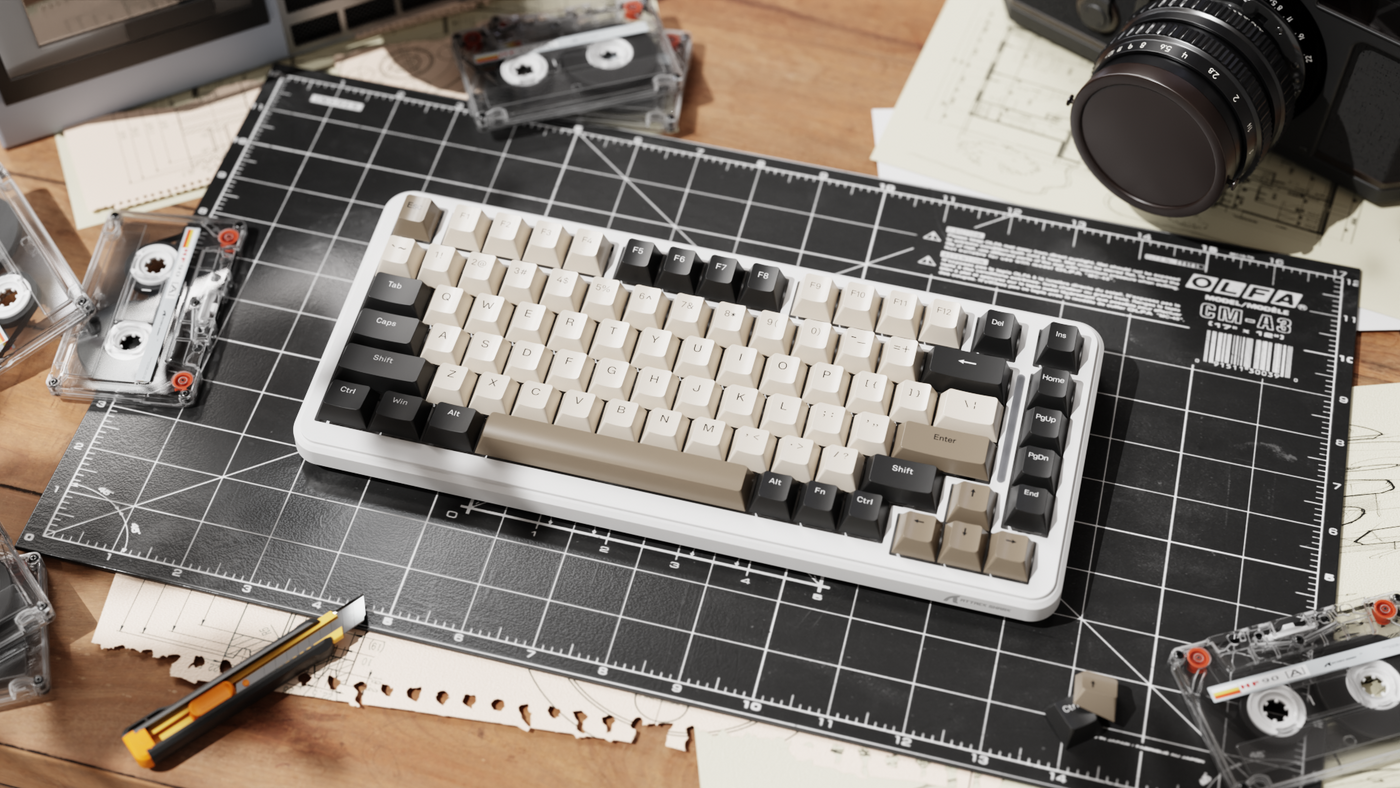
In the pursuit of the "perfect" typing sound, the mechanical keyboard community has evolved from simple lubrication to sophisticated acoustic engineering. Among these modifications, the Tempest Tape Mod—named after its creator, "Tempest" from the keyboard forums—has emerged as the gold standard for "value evangelism." It promises a transformative shift in sound profile for the cost of a single roll of tape.
However, as the "Specification Credibility Gap" widens between marketing claims and real-world performance, enthusiasts must look beyond basic tutorials. Achieving a clean, deep "thock" requires an understanding of frequency attenuation, material density, and the subtle electrical risks inherent in placing adhesives directly onto a Printed Circuit Board (PCB). This guide provides a technical blueprint for executing the Tempest Tape Mod with professional-grade precision.
The Physics of Keyboard Resonance: Thock vs. Clack
To modify sound effectively, we must first define the acoustic targets. In mechanical keyboard terminology, "thock" refers to sound energy concentrated in the low-frequency range, typically below 500 Hz. Conversely, "clack" is characterized by high-frequency resonance, often peaking above 2000 Hz.
The Tempest Tape Mod acts as a low-pass filter. When layers of tape are applied to the back of the PCB, they increase the mass and damping coefficient of the assembly. This setup absorbs high-frequency vibrations before they can reflect off the bottom of the keyboard case. According to the Global Gaming Peripherals Industry Whitepaper (2026), modern peripheral design increasingly focuses on these internal "acoustic chambers" to satisfy enthusiast demands for refined sound signatures.

Material Selection: The 0.2mm Threshold
The most common mistake beginners make is selecting tape based solely on availability rather than material properties. While blue painter's tape is the traditional choice, it is often suboptimal for high-spec, value-oriented boards.
Through our analysis of acoustic porous media, similar to the standards discussed in Frontiers in Acoustics, we have identified that tape density and thickness are the primary drivers of sound change.
| Tape Type | Density (Approx.) | Typical Thickness | Acoustic Profile |
|---|---|---|---|
| Blue Painter's Tape | 0.95 g/cm³ | 0.13mm - 0.15mm | Aggressive dampening; can lead to a "muddy" sound. |
| Polyimide (Kapton) | 1.42 g/cm³ | 0.05mm - 0.06mm | Precise mid-high attenuation; preserves tactile crispness. |
| Masking Tape | 0.85 g/cm³ | 0.12mm | High risk of adhesive residue; inconsistent damping. |
| Electrical Tape | 1.30 g/cm³ | 0.18mm | Too thick; risks heat retention and PCB "suffocation." |
The 0.2mm Rule: If the total thickness of your tape layers exceeds 0.2mm, you risk over-dampening the high-end frequencies. This results in a "dead" sound that lacks the character and feedback necessary for a premium typing experience. For most builds, two layers of 0.05mm polyimide tape provide the optimal balance.
Addressing the "Gotchas": Capacitive Interference and Safety
Expert modding goes beyond sound; it prioritizes the longevity of the hardware. Most guides warn against short circuits from conductive adhesives, but a more subtle failure mode is capacitive interference.
Certain tape dielectrics can affect the PCB's traces, particularly on boards with high-sensitivity sensors or Hall Effect (magnetic) switches. This interference can lead to ghosting or inconsistent actuation. Furthermore, any modification involving internal electronics should consider the guidelines set by the FCC Equipment Authorization regarding unintended radiators and electromagnetic compatibility (EMC).
Expert Safety Checklist:
- Continuity Test: Use a multimeter to test the tape's resistance before application. Even if marketed as non-conductive, batch inconsistencies can occur.
- ESD Protection: Work on an anti-static mat. Electrostatic discharge can latent-damage PCB components during the disassembly process.
- Battery Clearance: If your keyboard is wireless, never cover the battery with tape. This can lead to heat entrapment, violating safety protocols monitored by the EU Safety Gate.
Scenario Analysis: Plate Material Synergy
The effectiveness of the Tempest Tape Mod is heavily dependent on your keyboard's plate material. A "one-size-fits-all" approach often leads to disappointing results.
Scenario A: The Stiff Aluminum Plate
Aluminum plates are acoustically "bright," acting as a high-pass filter that emphasizes frequencies above 2 kHz. This often creates a metallic "ping."
- The Solution: Apply a "checkerboard" pattern of polyimide tape. By leaving small gaps of exposed PCB, you allow some high-frequency resonance to escape, preventing the board from sounding muted while still attenuating the harsh 1–2 kHz "ping" by an estimated 3–6 dB.
- Internal Reference: Learn more about Eliminating Case Ping to complement this mod.
Scenario B: The Flexible Polycarbonate (PC) Plate
PC plates are naturally deeper and softer. They already absorb significant high-frequency energy.
- The Solution: Use a single, "striped" layer of tape. Over-modding a PC plate with multiple layers will likely result in a "mushy" acoustic profile that lacks definition.
- Internal Reference: Compare how Nylon vs. Polycarbonate shapes your base sound before modding.
Step-by-Step Execution: The Striped Technique
To achieve professional results, we recommend the "Striped" or "Checkerboard" application over full coverage. This preserves the "pop" of the switches while deepening the overall resonance.
- Disassemble with Care: Remove the keycaps and switches (if hot-swappable). Unscrew the PCB from the case. Ensure you are grounded to prevent ESD.
- Clean the PCB: Use 90%+ Isopropyl Alcohol to remove any factory oils or dust from the back of the PCB. This ensures the adhesive bonds correctly without trapping contaminants.
- Apply the First Layer: Lay strips of 0.05mm polyimide tape horizontally across the back of the PCB. Avoid covering the reset button or any JST connectors for the battery/daughterboard.
- The "Checkerboard" Gap: For the second layer (if desired), apply strips vertically, but leave 2mm gaps between them. This structural nuance allows the PCB to "breathe" acoustically, preventing the sound from becoming "boxy."
- Reassemble and Baseline: Before fully tightening the case screws, plug the keyboard in and test every key using a web-based tester. This catches any connectivity issues caused by tape thickness affecting the switch seating.
Measuring Success: Acoustic Benchmarking
To validate your mod, we suggest following a methodology similar to the RTINGS Mouse Click Latency Methodology, but adapted for acoustics. Record a "baseline" typing test before the mod using a consistent microphone distance and gain setting.
Analyze the recording using a Spectrum Analyzer (many free software options exist). Look for a shift in the peak frequency. A successful "thock" mod will show a visible migration of peak energy from the 2 kHz region down toward the 400–600 Hz range. If the peak remains high but the volume drops, you have likely over-dampened the board rather than retuned its resonance.
Common Pitfalls and Troubleshooting
- "My keyboard sounds hollow even after the mod": This is often due to "Case Ping." The tape mod affects the PCB, but not the air gaps in the case. Consider adding a thin layer of PE Foam or silicone dampening to the bottom of the case.
- "The keys feel harder to press": If the tape is too thick, it can push against the bottom of the switches, preventing them from fully clipping into the plate. This can cause inconsistent actuation. Reduce the number of tape layers.
- "Bluetooth/2.4GHz range has decreased": Some tapes, especially those with metallic components or high carbon content, can shield the internal antenna. Ensure the area around the wireless antenna is completely free of tape.
The Value Evangelist's Conclusion
The Tempest Tape Mod remains one of the most effective ways to achieve a premium sound profile on a budget. By moving away from the "more is better" mentality and adopting a data-driven approach to material selection and application, you can bypass the "Specification Credibility Gap."
Whether you are sharpening the sound of a stiff aluminum plate or deepening a polycarbonate build, the key is precision. Start with thin polyimide tape, test your results against a baseline, and remember that in the world of keyboard acoustics, the best modifications are often the most subtle.
Disclaimer: This article is for informational purposes only. Modifying your keyboard may void your manufacturer's warranty. Always follow proper ESD safety protocols and consult your device's manual before disassembly. We are not responsible for damage to hardware resulting from improper modding techniques.