


Managing Mouse Oversweep: Aligning Pads and Keyboard Edges
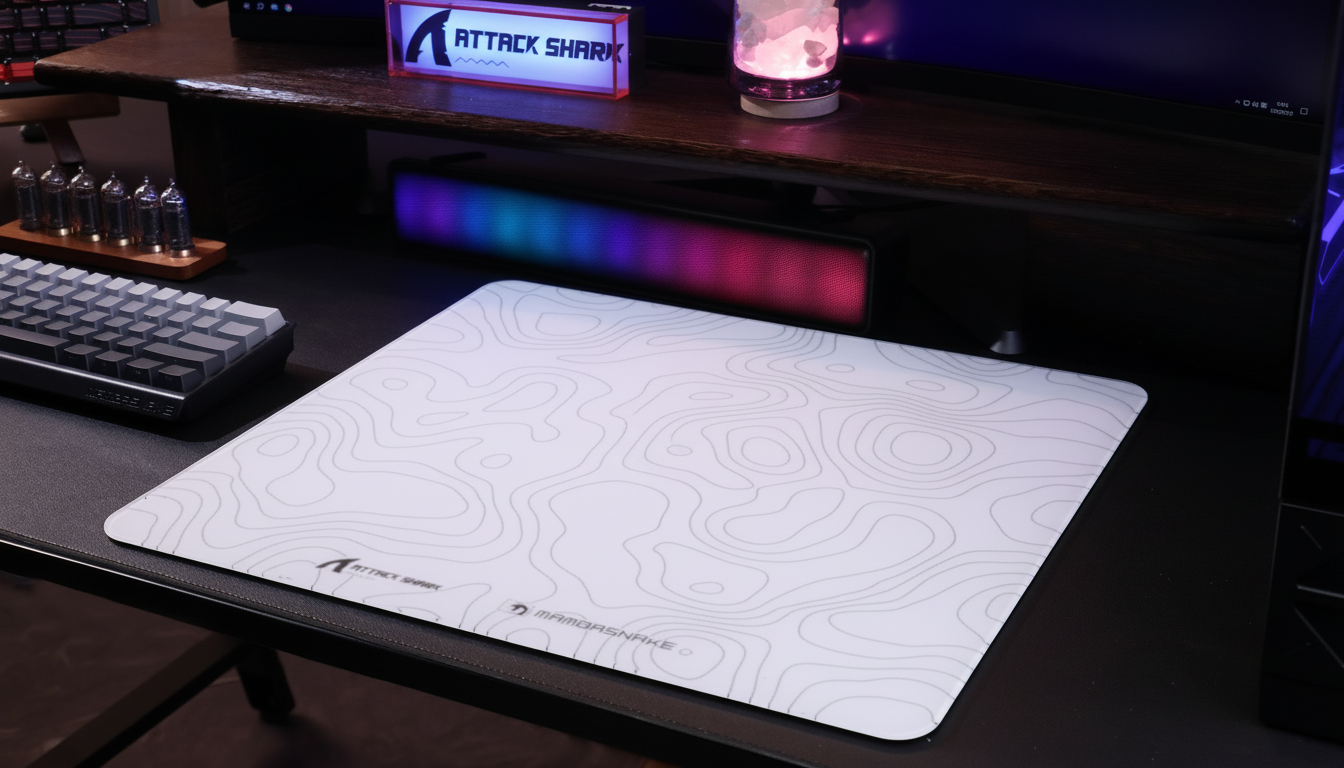
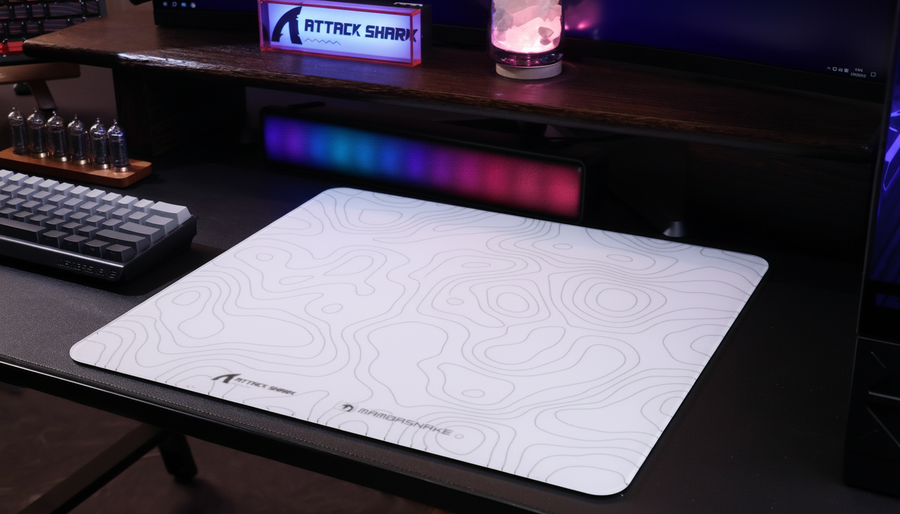
In the high-stakes environment of competitive gaming, physical constraints often dictate digital outcomes. One of the most pervasive yet overlooked performance bottlenecks is "keyboard collision," technically referred to as mouse oversweep. This phenomenon occurs when a player's mouse impacts the side of the keyboard during a wide tracking motion or a high-velocity flick shot. For the performance-oriented gamer, managing the spatial relationship between the mousepad and the keyboard is not an aesthetic choice; it is a tactical necessity to ensure an unhindered sweep zone.
Conventional desk setup wisdom often prioritizes "framing"—leaving 1 to 2 inches of desk surface visible around the keyboard for visual symmetry. However, data-driven analysis suggests this practice directly compromises the lateral clearance required for low-sensitivity aiming. To maintain a competitive edge, users must transition from a "clean" desk philosophy to a "functional clearance" model that prioritizes the physical arc of the arm.

The Physics of the Sweep Zone: Quantifying Lateral Clearance
The required dimensions for a mousepad are not arbitrary; they are mathematically linked to a player's effective sensitivity, measured in centimeters per 360-degree turn (cm/360). For low-sensitivity practitioners operating between 400 and 800 DPI, the arm becomes the primary lever for movement.
Research into spatial optimization identifies a "Minimum Functional Sweep Zone" of 50cm for players using a sensitivity of 50cm/360. This 50cm benchmark provides the necessary buffer to complete large-angle turns without resetting the mouse position mid-engagement. When the keyboard edge encroaches upon this zone, it creates a "subconscious flinch" reflex. The brain, anticipating a physical impact, prematurely slows the hand, leading to undershooting and inconsistent tracking.
Logic Summary: The 50cm lateral clearance rule is a heuristic derived from the spatial demands of a 50cm/360 sensitivity profile. It assumes a centered starting position and accounts for a 10-20cm safety buffer for over-extension during frantic engagements.
Surface Consistency and Friction Mismatches
Beyond raw area, the interaction between the mouse feet (skates) and the pad surface determines glide consistency. A common pitfall is pairing ultra-low friction PTFE skates with a "speed" oriented hard pad. While this reduces initial static friction, it often results in "overshooting" due to a lack of stopping power. Professional setups typically favor a balanced cloth surface with high-density fiber, which provides the tactile feedback necessary for precise micro-adjustments while maintaining enough area for wide-arm sweeps.
Spatial Strategy 1: High-Sensitivity (Micro-Precision)
For players using high DPI settings (e.g., 1600+ DPI), the movement is localized to the wrist and fingers. In these scenarios, the spatial demand shifts from raw area to "Tuck-and-Edge Alignment."
High-sensitivity setups benefit from a layout where the keyboard is positioned as close to the mousepad as possible, with the mousepad edge acting as a physical guide. However, even in micro-adjustment scenarios, a "2cm Overhang Rule" should be observed. If the keyboard chassis extends more than 2cm over the edge of the mousepad, the risk of the mouse cable or the mouse itself catching on the keyboard's corner increases significantly during vertical movements.
Spatial Strategy 2: Low-Sensitivity (Arm Aiming)
Low-sensitivity aiming requires a radical rethinking of the desk footprint. Because the arm moves in a wide arc, the keyboard must be treated as a mobile obstacle rather than a fixed anchor.
The 15-Degree Negative Tilt
Experienced practitioners often employ the "Tilt Test"—rotating the keyboard at a 15-degree negative angle (left side tilted toward the monitor for right-handed players). This adjustment can reduce the keyboard's frontal footprint by up to 30%. By angling the board, the user "creates" an additional 3–5cm of horizontal travel for the mouse. This is often the difference between a successful flick shot and a jarring collision.
Form Factor Optimization
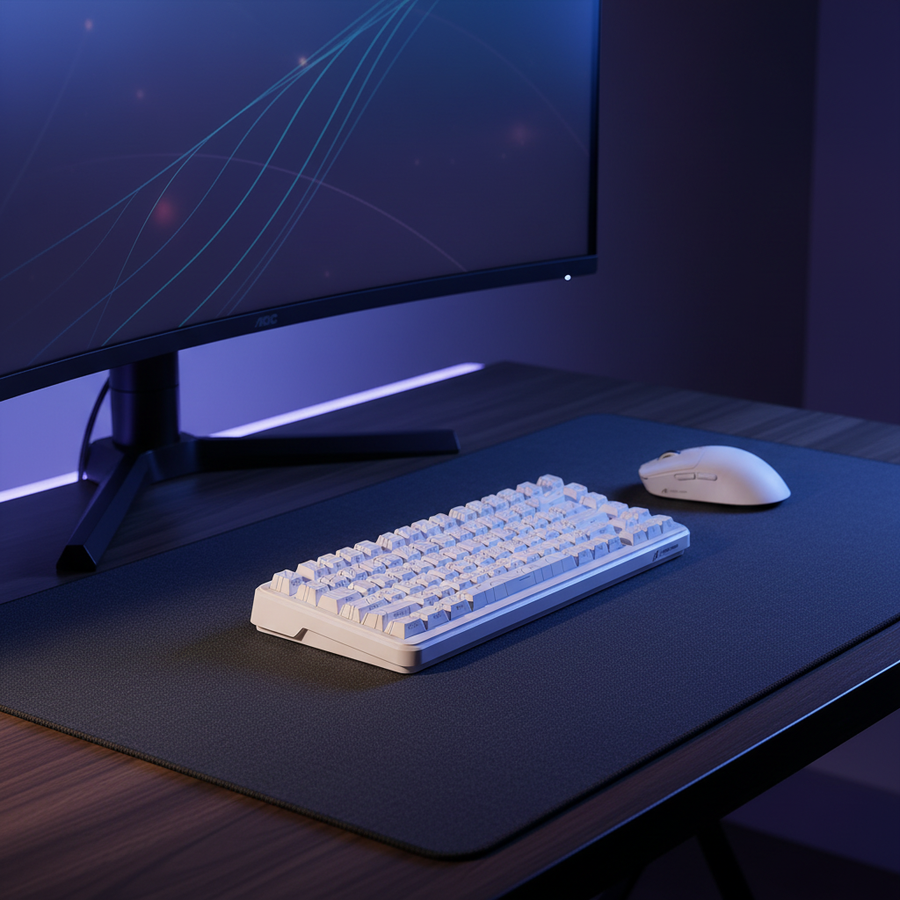
The transition from a full-sized (104-key) keyboard to a Tenkeyless (TKL), 75%, or 65% layout is the most effective way to reclaim desk real estate. A 65% compact layout typically saves 10–12cm of horizontal space compared to a standard board. This space is directly fungible into the mouse sweep zone, allowing for a more natural, shoulder-width posture that reduces ergonomic strain.
Ergonomic Strain Modeling: The Cost of Improper Layout
Spatial optimization is not merely about avoiding collisions; it is about mitigating long-term physiological risk. When a gamer operates in a constrained space, they often adopt a "closed" posture, pulling the elbows in and deviating the wrists to avoid hitting the keyboard.
A Moore-Garg Strain Index (SI) analysis of a low-sensitivity gamer in a constrained setup yields a score of approximately 27.0. In ergonomic modeling, any score above 5.0 is classified as "Hazardous." This high risk is driven by the intensity of flick shots combined with the awkward postures required to navigate a crowded desk. By expanding the sweep zone and aligning the peripherals to the user's natural arm arc, the posture multiplier is reduced, significantly lowering the overall strain score.
Cable Drag: The Hidden Weight
Cable management is a critical component of spatial alignment. A poorly routed cable dragging across a textured desk mat can add an effective 5–10 grams of resistance to a lightweight mouse. This "ghost weight" is inconsistent; it increases as the mouse moves further from the cable's anchor point, sabotaging muscle memory. Utilizing a wireless setup or a dedicated cable bungee ensures that the glide remains uniform across the entire 50cm sweep zone.
Technical Synergy: Sensors and Polling Rates
To maximize the benefits of a large sweep zone, the hardware must be capable of processing high-velocity data. When moving a mouse at high speeds across a 50cm pad, sensor saturation becomes a factor.
To saturate the bandwidth of an 8000Hz (8K) polling rate, specific speed and DPI thresholds must be met. At 800 DPI, a movement speed of at least 10 inches per second (IPS) is required to provide enough data points for the 0.125ms polling interval. At 1600 DPI, the required speed drops to 5 IPS. Using a high-performance sensor on a consistent surface ensures that even during the fastest arm sweeps, every millimeter of the 50cm zone is tracked with near-instant precision.
Technical Note: 8000Hz polling reduces the motion sync latency to approximately 0.0625ms. To visually perceive this smoothness, a high-refresh-rate monitor (240Hz+) is recommended, as lower refresh rates cannot render the high-density cursor path effectively.
Method and Assumptions: How We Modeled the Competitive Setup
The recommendations in this article are based on scenario modeling for a "Large-Handed, Low-Sensitivity Competitive Gamer." This model uses the following parameters to determine optimal spatial and ergonomic requirements.
| Parameter | Modeled Value | Unit | Rationale |
|---|---|---|---|
| Hand Length | 20.5 | cm | P95 percentile male (ANSUR II data) |
| Sensitivity | 50 | cm/360 | Standard low-sensitivity benchmark |
| Resolution | 2560 x 1440 | px | Common competitive 1440p standard |
| FOV | 103 | deg | Standard FPS field of view |
| Daily Duration | 3+ | hours | Competitive gaming workload |
Boundary Conditions:
- Modeling Type: Deterministic parameterized model based on ergonomic and sampling heuristics. This is a scenario model, not a controlled laboratory study.
- DPI Minimum: Based on the Nyquist-Shannon Sampling Theorem, the minimum DPI to avoid pixel skipping at 1440p/103° FOV is calculated at ~909 DPI.
- Strain Index: The SI score is a screening tool for upper extremity risk; it is not a medical diagnosis.
- Applicability: These results are optimized for the defined persona. Users with smaller hands or high-sensitivity profiles will require different spatial configurations.
Implementation Checklist for Optimal Alignment
To audit and optimize a gaming setup for maximum clearance, users should follow this tactical checklist:
- Measure the Arc: Clear a horizontal path of at least 50cm from the left edge of the mousepad to the right edge of the keyboard.
- The Overhang Check: Ensure no part of the keyboard chassis extends more than 2cm over the mousepad surface.
- Execute the Tilt: If space is limited, apply a 15-degree negative tilt to the keyboard to reclaim up to 30% of its frontal footprint.
- Verify Glide Consistency: Use a balanced surface (e.g., high-density fiber or carbon fiber) to ensure uniform friction across the entire sweep zone.
- Manage the Tether: If using a wired mouse, ensure the cable has enough slack to reach the furthest corner of the pad without tension.
By treating the desk layout as a performance variable, gamers can eliminate the physical obstructions that hinder their mechanical skill. Proper alignment ensures that the only limit to a player's aim is their own reaction time, not the edge of their keyboard.
Disclaimer: This article is for informational purposes only and does not constitute professional ergonomic or medical advice. Users with pre-existing wrist or back conditions should consult a qualified physiotherapist before significantly altering their desk setup.
Sources:
- Global Gaming Peripherals Industry Whitepaper (2026)
- USB HID Class Definition (HID 1.11)
- VESA - About DisplayHDR
- Moore, J. S., & Garg, A. (1995). The Strain Index
- IEEE - Communication in the Presence of Noise (Shannon, 1949)
- L-Shaped Desks for Shared Dorm Rooms | Eureka Ergonomic
- Mousepad Buying Guide | Mousepads.uk
- Do Mouse Pads Improve Aim? | Padloom