


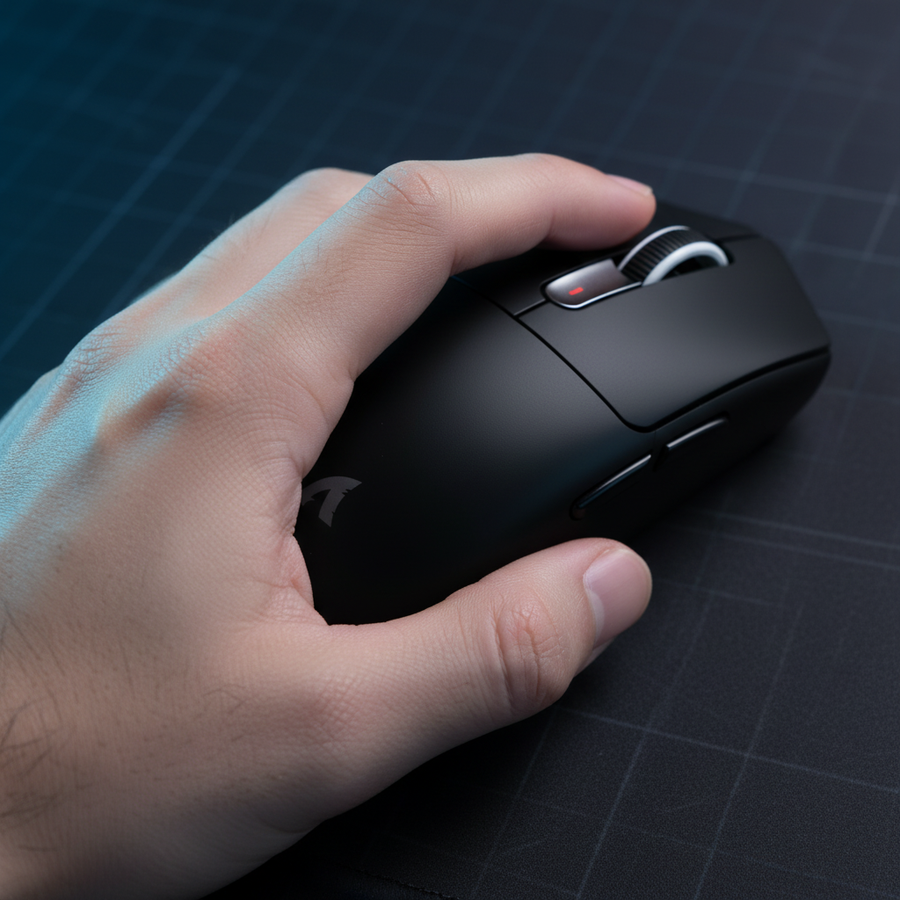
The Physics of Grip: Defining Spatial Displacement
The "feel" of a gaming mouse is often reduced to subjective marketing descriptors like "ergonomic" or "natural." However, for technically-minded gamers seeking a competitive edge, subjective comfort is an unreliable metric. Engineering a precise interface between human anatomy and hardware requires a quantitative understanding of Spatial Displacement—the physical interaction between the hand's volume and the mouse shell's internal and external voids.
Spatial Displacement determines how much "empty space" exists within a player's grip. This void is not wasted space; it is the mechanical tolerance required for micro-adjustments. When a mouse shell occupies too much of the hand’s natural grip volume, it restricts finger flexion, leading to "stiff" aiming. Conversely, excessive empty space can lead to instability during high-velocity flick motions. This article introduces the Spatial Displacement Ratio (SDR) as a technical framework for optimizing hardware selection based on objective anthropometric data.

Anatomy of Volume: Measuring the Human Hand
To calculate a meaningful ratio, one must first quantify the volume of the hand. While simple length and width measurements are common, they fail to account for the three-dimensional mass that interacts with a mouse.
Water Displacement Volumetry (WDV)
The standard clinical method for measuring limb volume is Water Displacement Volumetry (WDV). According to practitioners in the Global Gaming Peripherals Industry Whitepaper (2026), WDV is highly reliable but sensitive to operator technique.
- The Finger Flexion Variable: Hand volume readings are significantly affected by finger positioning. A relaxed, slightly cupped hand—typical of a gaming grip—yields a 10-15% higher volume reading than a fully splayed hand.
- Reliability: Reported inter-rater reliability (ICC) for limb volumetry ranges from 0.80 to 0.99. For gaming purposes, standardized "relaxed-cup" positioning is essential to maintain a consistent baseline.
Anthropometric Tiers
Based on ISO 9241-410 and ISO 7250 standards, hand sizes are typically tiered by length. For a male in the P95 percentile, the hand length is approximately 20.7cm. This demographic often struggles with mass-market mice, as the spatial displacement becomes cramped, forcing a transition from palm to aggressive claw or fingertip grips to maintain micro-adjustment capability.
| Hand Size Tier | Length Range (cm) | Percentile Correlation (Male) | Typical Grip Requirement |
|---|---|---|---|
| Small | < 17.0 | < P5 | Palm / Full Fit |
| Medium | 17.0 - 19.0 | P5 - P60 | Claw / Relaxed Palm |
| Large | 19.0 - 21.0 | P60 - P99 | Aggressive Claw / Fingertip |
| Extra Large | > 21.0 | > P99 | Pure Fingertip |
Methodology Note: These tiers are derived from population-level averages (ISO 7250-1:2017). Individual joint flexibility and palm-to-finger length ratios may alter the recommended grip style.
Quantifying the Shell: Beyond Exterior Dimensions
The advertised dimensions of a gaming mouse (LxWxH) are often misleading when calculating usable volume. Highly sculpted shells, such as those found on ergonomic right-handed models, contain non-geometric cavities that exterior measurements cannot capture.
The 30% Sculpture Gap
Engineers often use granular fill materials, such as millet seeds, to measure these non-geometric cavities. This "seed displacement" method, commonly used in archaeology for measuring fragile or porous objects, reveals that standard LxWxH calculations can overestimate usable internal shell volume by up to 30%.
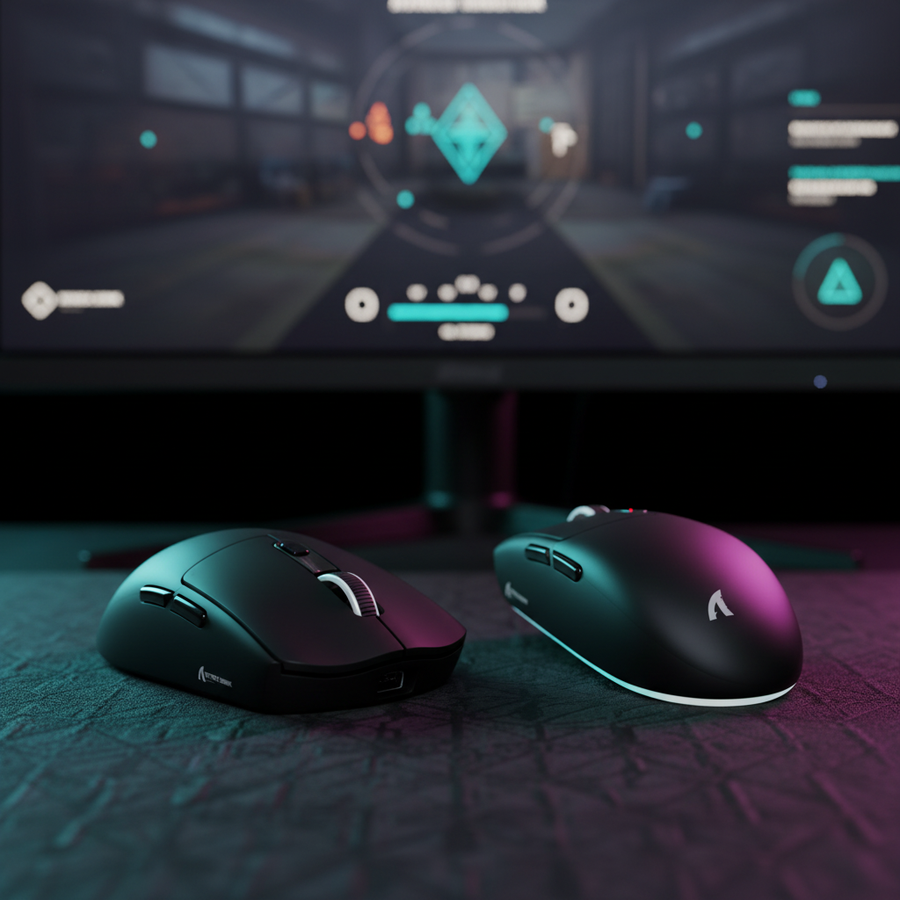
For example, the ATTACK SHARK G3PRO Tri-mode Wireless Gaming Mouse with Charge Dock 25000 DPI Ultra Lightweight features an ergonomic shell designed to minimize weight (62g). Its dimensions are 125 x 63 x 39.7 mm. While its "box volume" suggests a medium-large profile, the internal void space is optimized to allow for the "air" required by fingertip and claw grippers.
CAD Modeling vs. Physical Displacement
In modern product design, "internal shell volume" is a critical parameter calculated via 3D CAD software from negative molds. This focuses on the void space available for hand placement rather than the solid displacement of the plastic itself. For value-tier mice, this engineering detail is what separates a "clunky" budget mouse from a high-performance tool.
The Spatial Displacement Ratio (SDR) Framework
The SDR is a heuristic used by professional reviewers to quantify the "fit" of a mouse. It is calculated as the ratio of the hand's grip volume to the effective volume of the mouse shell.
- SDR 0.85 - 0.95 (The Control Sweet Spot): Typically preferred for claw grippers. This range allows for micro-adjustments via finger flexion without the mouse feeling loose in the hand. It provides enough contact for stability during rapid "stop-and-flick" motions.
- SDR > 1.05 (The Fingertip "Air" Target): Targeted by fingertip grippers who require maximum freedom. This high ratio indicates significant empty space between the palm and the shell, enabling the fingers to move the mouse independently of the wrist.
Logic Summary: Our SDR targets assume a standard competitive FPS context. These are heuristics (rules of thumb) for quick selection and may vary based on the specific surface friction of the mouse coating or the use of grip tapes.
Case Study: The P95 Large-Handed Competitor
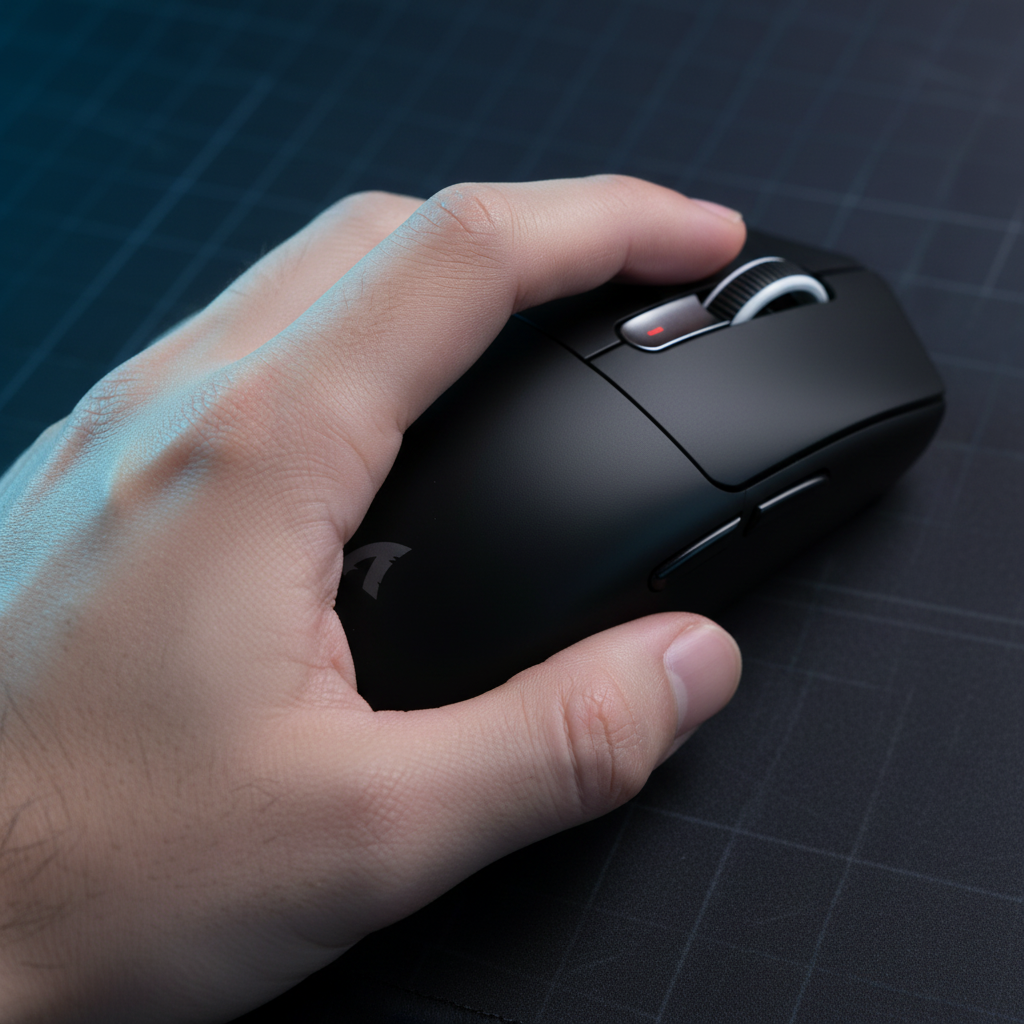
To demonstrate the practical application of SDR, we modeled a scenario for a competitive FPS player with P95 percentile male hands (20.7cm length, ~93mm breadth) using a pure fingertip grip.
Performance Analysis: ATTACK SHARK G3PRO
For this user, the ideal mouse length for a fingertip grip is calculated as ~124.2mm (Hand Length × 0.6). The ATTACK SHARK G3PRO, at 125mm, provides a near-ideal length ratio of 1.0064.
| Metric | Value | Rationale |
|---|---|---|
| Hand Length | 20.7 cm | P95 Male Baseline |
| Target Length | 124.2 mm | 60% Rule for Fingertip |
| G3PRO Length | 125 mm | Hardware Specification |
| Fit Ratio | 1.0064 | Near-Ideal Dimensional Match |
In this scenario, the G3PRO's 62g ultra-lightweight build complements the high SDR. Because the user has significant "air" in their grip, a heavier mouse would create excessive inertia, leading to instability. The G3PRO’s PixArt 3311 sensor, supporting up to 25,000 DPI, ensures that even the smallest finger flexions are captured with precision.
Technical Synergy: 8K Polling and Stability
When using a high SDR (fingertip) grip, the stability of the sensor data becomes paramount. High-performance mice are increasingly moving toward 8000Hz (8K) polling rates to reduce input latency.
- Latency Logic: 8000Hz results in a near-instant 0.125ms polling interval. At this frequency, Motion Sync adds a negligible deterministic delay of approximately 0.0625ms.
- Saturation Requirements: To saturate 8000Hz bandwidth at 800 DPI, a user must move the mouse at 10 IPS. However, at 1600 DPI, only 5 IPS is required. For fingertip grippers making micro-adjustments, higher DPI settings are often necessary to maintain 8K stability during slow movements.
- System Constraints: 8K polling stresses CPU IRQ (Interrupt Request) processing. It is critical to use direct motherboard ports (Rear I/O) rather than USB hubs or front panel headers to avoid packet loss.
For users seeking maximum speed, pairing the G3PRO with a low-friction surface like the ATTACK SHARK CM05 Tempered Glass Gaming Mouse Pad is recommended. The CM05 features a 9H Mohs hardness and a nano-micro-etched texture that minimizes drag, which is essential when the grip itself provides minimal physical damping.
Practical Optimization: Grip Tape and Signal Integrity
If a user finds their SDR is slightly too high (feeling unstable), a common tweak is the application of textured grip tape. Adding 0.5mm to 1.0mm of tape to the sides can increase effective shell volume by 2-4%, effectively "tuning" the SDR toward the preferred range without changing the mouse itself.
Furthermore, maintaining a clean signal path is vital for high-polling performance. Utilizing a high-quality cable, such as the ATTACK SHARK C04-C COILED CABLE, ensures lossless signal transmission. Its 5-pin aviator connector and reversed-coil design prevent the cable from interfering with the spatial freedom required by high-SDR grips.
Safety and Compliance
When selecting high-performance wireless peripherals, technical specs must be balanced with safety standards.
- Battery Safety: Wireless mice like the G3PRO utilize lithium-ion batteries. These must comply with UN 38.3 for safe transport and EU Battery Regulation (EU) 2023/1542 for sustainability and labeling.
- RF Compliance: Devices should be verified via FCC ID Search (e.g., Grantee Code 2AZBD) to ensure they meet radio frequency exposure and interference standards.
- USB Standards: Connectivity should adhere to USB HID Class Definitions to ensure universal compatibility and low-latency reporting across Windows and macOS environments.
Appendix: Modeling Methodology
The quantitative conclusions in this article are based on deterministic scenario modeling.
| Parameter | Value / Range | Unit | Rationale |
|---|---|---|---|
| Hand Length (P95) | 20.7 | cm | ISO 7250 male average |
| Hand Breadth | 93 | mm | 45% of hand length |
| Grip Coefficient (k) | 0.6 | ratio | Heuristic for fingertip grip |
| SDR Target (Fingertip) | > 1.05 | ratio | Practitioner heuristic |
| SDR Target (Claw) | 0.85 - 0.95 | ratio | Practitioner heuristic |
Boundary Conditions:
- This model assumes a pure fingertip grip with no palm contact.
- Calculations are based on manufacturer-reported exterior dimensions; internal volume is estimated using a 30% sculpture gap adjustment for ergonomic shapes.
- Results may vary based on individual finger length ratios and joint flexibility.
Disclaimer: This article is for informational purposes only. Ergonomic requirements vary by individual; users with pre-existing repetitive strain injuries (RSI) should consult a medical professional before making significant changes to their peripheral setup.
Sources: