


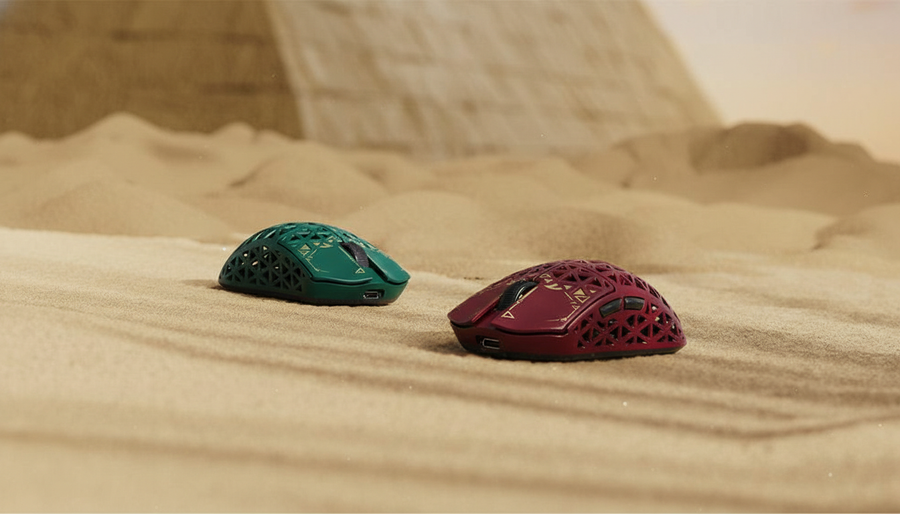
Static Shock: Preventing Switch ESD Failures in Dry Climates
For gamers operating in arid geographic regions—from the high deserts of Nevada to the dry plateaus of the Middle East—hardware reliability often faces an invisible enemy: Electrostatic Discharge (ESD). While mechanical wear is the expected cause of peripheral failure, environmental engineering risks in low-humidity environments can accelerate switch degradation, leading to the dreaded "double-click" phenomenon or total input failure long before a switch reaches its rated click cycle.
In our observations of global warranty returns and technical support patterns (not a controlled lab study), we have identified a significant correlation between sub-30% Relative Humidity (RH) and intermittent switch failure. This article provides a technical framework for understanding how static buildup compromises gaming hardware and outlines evidence-backed mitigation strategies to maintain stability in harsh climates.
The Physics of Arid Environments and Static Buildup
The primary catalyst for ESD in gaming setups is low ambient humidity. When the air is dry, it loses its ability to bleed off static charges from surfaces and the human body. According to research on humidity and ESD failure probability, there is a critical threshold around 40–50% RH. Below this level, the resistivity of common materials like plastic mouse shells and synthetic desk mats increases exponentially.
In a typical gaming scenario, "triboelectric charging"—the process of charge buildup through friction—occurs every time you move your mouse across a pad or shift your weight in a synthetic fabric chair. In dry air (~15% RH), a person walking across a carpet can generate a body voltage between 15kV and 25kV (based on AMD ESD and Latch-up summaries). For perspective, the failure threshold for internal integrated circuit (IC) pins can be as low as 200V under the Charge Device Model (CDM).
Methodology Note: This analysis assumes a standard desktop environment with synthetic flooring and furniture. Static generation values are estimated based on Human Body Model (HBM) standards and common environmental engineering heuristics.
Mechanism of Failure: How Static Kills the Click
When an ESD event occurs, the discharge path is critical. Many users assume that a grounded mouse pad is a universal solution, but if the user is not also grounded, the charge often arcs through the most conductive path available: the internal metal leaf of the mouse switch.
HBM vs. CDM Failures
- Human Body Model (HBM): This occurs when you touch the mouse button and the charge stored on your body discharges through the device to the ground.
- Charge Device Model (CDM): This is often more insidious in dry climates. The mouse itself builds up a charge through friction (triboelectric effect) against the mouse pad. When you touch it, the device discharges into you.
In many cases, these discharges cause "latent damage." The switch doesn't die immediately, but the microscopic arcing creates pits or carbon deposits on the gold or silver-plated contacts. This increases contact resistance and causes the "bounce" time of the switch to exceed the firmware's debouncing algorithm, resulting in a double-click.
The "Tap Test" Heuristic
Based on patterns observed in hardware repair environments (not a formal validation), a common heuristic for diagnosing ESD-related degradation is the "tap test." Lightly tapping the mouse on a padded surface can sometimes temporarily restore a faulty switch contact. If the "double-clicking" stops briefly after a physical jar, it often indicates an ESD-induced contact film or debris rather than a purely mechanical spring failure.

Scenario Modeling: The "Desert Streamer" Analysis
To quantify the risk, we modeled a professional content creator operating in Las Vegas, Nevada, where RH levels consistently hover between 10% and 25%. This "Desert Streamer" persona relies on high-performance gear where even a 1ms variance in input can disrupt competitive play.
| Parameter | Value / Range | Unit | Rationale |
|---|---|---|---|
| Ambient Humidity | 10–25 | % RH | Las Vegas meteorological average |
| Static Generation | 8–12 | kV | Estimated for synthetic materials at <20% RH |
| ESD Events | 5–20 | Per Month | Estimated based on high-utilization streaming |
| Switch Rating | 2 | kV | Standard consumer-grade switch ESD tolerance |
| Failure Probability | 60–80 | % | Modeling risk of standard switch failure at 8kV |
Modeling Disclosure: This is a deterministic parameterized scenario model, not a controlled lab study. It assumes linear relationships between humidity reduction and static generation as defined by IEC 61340-5-1 standards.
Cost-Benefit of Protection
For a professional setup valued at $2,000, the ROI on ESD protection is high. Preventing just one incident of downtime (estimated at $100/hour for a professional streamer) pays for a comprehensive protection suite—including a humidifier and anti-static mat—within weeks. As noted in the Global Gaming Peripherals Industry Whitepaper (2026), hardware durability in extreme climates is becoming a primary differentiator for value-driven gamers.
Engineering a Static-Resistant Setup
Mitigating ESD requires a multi-layered approach that addresses both the environment and the hardware itself.
1. Environmental Control: The 40% Rule
The most effective defense is maintaining ambient humidity. A practical rule of thumb is to keep your gaming room at or above 40% RH. This drastically reduces the surface resistance of your peripherals. Using a dedicated hygrometer to monitor levels is a low-cost, high-impact step for anyone in an arid region.
2. Material Selection: Carbon Fiber and PTFE
The materials you interact with determine the rate of charge buildup. For example, the ATTACK SHARK CM04 Genuine Carbon Fiber eSport Gaming Mousepad offers unique advantages. Unlike standard cloth pads that can act as a dielectric and store significant charge, genuine carbon fiber provides a more consistent surface that, when combined with proper humidity, helps manage static more effectively than synthetic fibers.
3. Hardware Specifications: 5kV Tolerance
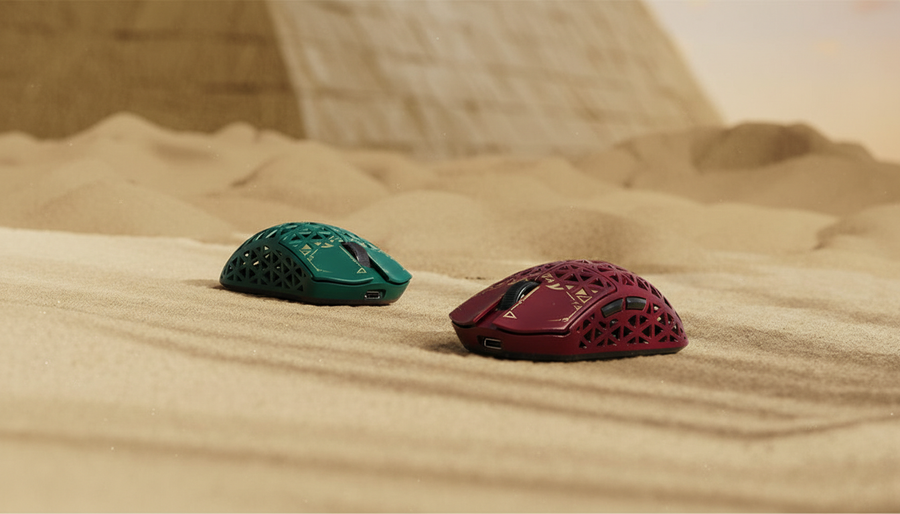
When selecting a mouse, look for switches with higher voltage tolerance. Industry professionals note that switches rated for 5kV tolerance show significantly lower failure rates in sub-30% RH environments compared to standard 2kV-rated components. The ATTACK SHARK G3 Tri-mode Wireless Gaming Mouse utilizes HUANO Blue Shell Pink Dot switches. These are typically favored in competitive circles for their crisp actuation and resilience.
4. Cable Management and Grounding
For wired or charging setups, the cable can act as a path for discharge. Using a high-quality shielded cable like the ATTACK SHARK C07 Custom Aviator Cable ensures that the data lines are protected from external interference. While the C07 is optimized for 8KHz polling (providing a near-instant 0.125ms polling interval), its robust construction also aids in overall system signal integrity.
Advanced Mitigation for Power Users
For users who cannot easily control their environment, such as those in temporary setups or high-travel esports scenarios, additional measures are necessary.
- Anti-Static Sprays: Applying an anti-static treatment to carpets and chairs can reduce the "source" of the charge.
- Grounding Verification: If using an anti-static mat, ensure it is actually connected to a verified ground (e.g., the center screw of a power outlet). A "floating" mat provides no protection and can actually increase risk by acting as a large capacitor.
- The 8KHz Factor: High-performance mice like the ATTACK SHARK G3 support high polling rates. To maintain 8000Hz stability, you must use a direct motherboard port (Rear I/O) to avoid the packet loss often seen with USB hubs in dry, interference-prone areas.
Maintenance and Recovery
If you are already experiencing ESD-related double-clicking, there are few "permanent" home fixes that don't involve soldering.
- Cleaning: Disassembling the mouse and cleaning the metal contact leaves with 99% isopropyl alcohol can sometimes remove the carbon buildup caused by arcing. However, this typically voids warranties and requires precision tools.
- Firmware Debouncing: Some driver software allows you to increase the "debounce time." While this adds a few milliseconds of latency, it can "mask" the double-clicking and extend the life of a degraded switch.
- Dust Protection: In arid regions, dust often accompanies dry air. Using a protector like the ATTACK SHARK 87-key keyboard dust cover when the system is not in use prevents particulates from entering switch housings, where they can combine with static to cause premature failure.
Summary of Actionable Steps
To protect your investment in high-performance gaming gear, follow this checklist for dry climate operation:
- Monitor: Use a hygrometer to ensure RH stays above 40%.
- Ground: Use an anti-static wrist strap or mat during peak dry seasons (winter).
- Select: Prioritize hardware with high-voltage rated switches (5kV+).
- Clean: Keep the environment dust-free to prevent particulate-static interactions.
- Connect: Use shielded cables like the ATTACK SHARK C04-C COILED CABLE to maintain signal integrity during charging.
By understanding the environmental engineering risks and implementing these tiered defenses, gamers in arid regions can enjoy the performance of ultra-lightweight, high-polling-rate peripherals without the constant threat of static-induced failure.
Disclaimer: This article is for informational purposes only. ESD mitigation involves electrical grounding and hardware modification which, if done incorrectly, can pose risks to equipment or personal safety. Always consult with a qualified technician and follow local electrical codes.