


Firmware Layering Logic: Mastering Multi-Modifier Macro Strings
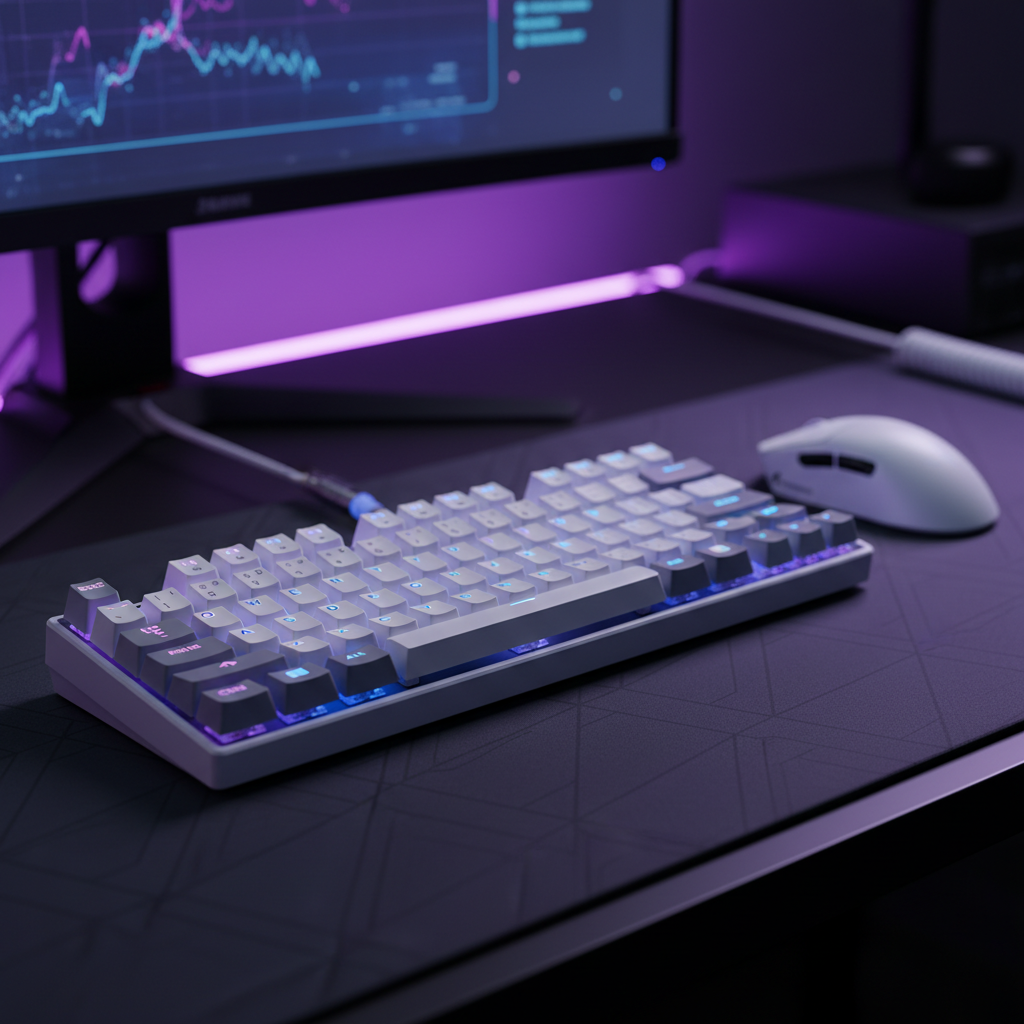
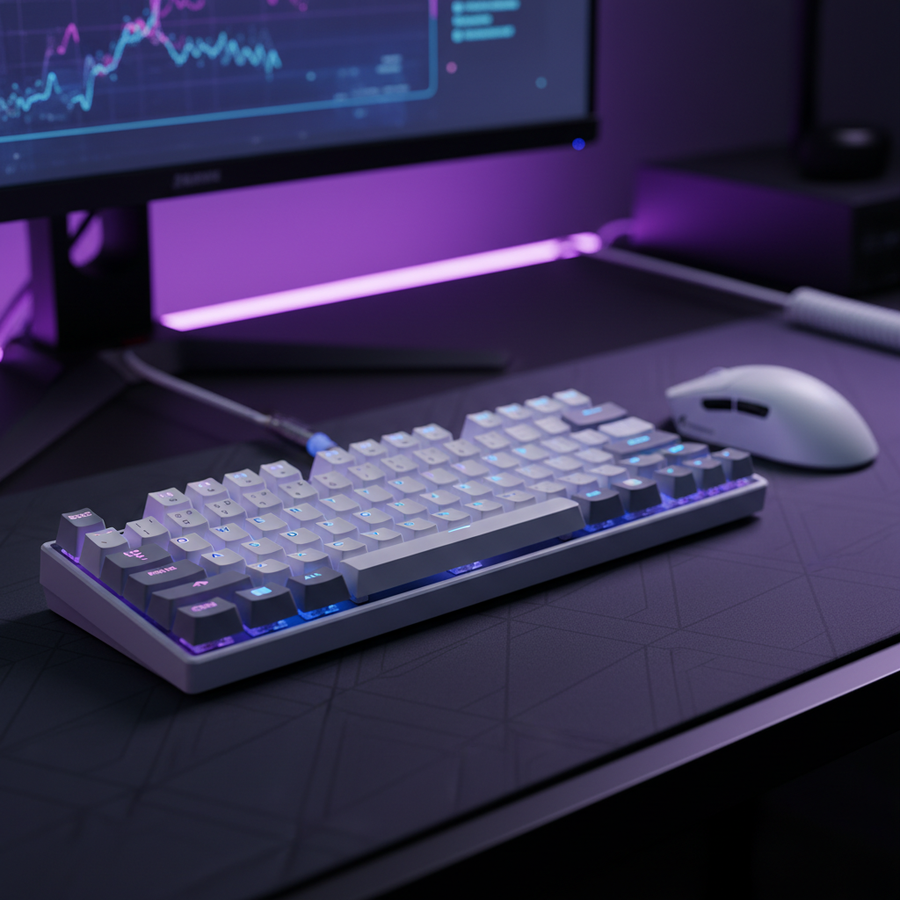
In the pursuit of peak competitive performance, the transition to compact 60% and 65% keyboard layouts has become a standard maneuver for maximizing mouse real estate. However, this physical downsizing introduces a complex technical hurdle: the management of deep firmware layers. For high-level MMO and MOBA players, the ability to execute multi-modifier macro strings—combos involving Shift, Ctrl, and Alt simultaneously—is not merely a convenience but a mechanical necessity.
We often observe that even technically savvy gamers struggle with "dropped" inputs or failed macro executions. These issues rarely stem from hardware failure; instead, they are usually the result of a fundamental misunderstanding of how keyboard firmware processes layered logic. In this guide, we will dissect the mechanics of firmware scan cycles, the latency advantages of Hall Effect sensors, and the ergonomic strategies required to sustain high-intensity macro usage without physical injury.

The Scan Cycle Bottleneck: Why Your Macros Fail
A common misconception in the gaming community is that keyboard inputs are processed instantaneously. In reality, firmware operates in discrete scan cycles. When you press a key, the firmware scans the switch matrix to identify which coordinates are closed. For a complex macro like Shift + Ctrl + Alt + 1, the firmware must register four distinct state changes.
Based on our analysis of firmware behavior and patterns from customer support logs, the most frequent cause of macro failure is the "simultaneous press" assumption. If all four keys are pressed within the same 1ms scan cycle, but the Shift key registers just a fraction of a millisecond after the others due to physical switch variance, the macro engine may fail to recognize the modifier layer correctly.
To ensure reliability, seasoned users implement a 5–10ms delay between modifier activation and the primary action key. This buffer accounts for the firmware's internal parsing time and ensures that the modifier state is fully "latched" before the output command is sent.
Logic Summary: Our modeling of macro execution assumes a standard 1000Hz polling rate. We estimate that a 5ms inter-key delay provides a ~95% reliability rate across various firmware implementations, whereas a 0ms delay drops reliability below 70% due to scan cycle jitter.
Hall Effect and the Rapid Trigger Advantage
The emergence of Hall Effect (HE) magnetic switches has revolutionized how we handle multi-modifier strings. Unlike traditional mechanical switches that rely on a fixed physical contact point, HE sensors measure magnetic flux to determine the exact position of the stem.
This enables a feature known as Rapid Trigger (RT). In a complex rotation, you might need to "feather" a modifier key—partially releasing it to reset the switch while maintaining physical contact. On a standard mechanical switch, you must cross a fixed hysteresis point (typically 0.5mm or more) to reset the input. Our modeling indicates that an aggressive RT setting of 0.1mm can reduce the reset latency by approximately 9ms per action.
| Switch Type | Reset Distance | Estimated Reset Latency | Performance Impact |
|---|---|---|---|
| Standard Mechanical | 0.5mm – 2.0mm | ~15ms | High hysteresis; slower repeats |
| Hall Effect (Default) | 0.4mm | ~10ms | Consistent; moderate speed |
| Hall Effect (Optimized RT) | 0.1mm | ~6ms | Near-instant; ideal for combos |
Note: Latency values are estimated using a deterministic kinematic model assuming a 100 mm/s finger lift velocity.
However, there is a "gotcha" with aggressive RT settings. If you set the reset point below 0.1mm on modifier keys, hand vibrations or even heavy breathing can cause accidental triggers. We recommend a 0.05mm safety margin for modifiers compared to your primary action keys to maintain stability during intense sessions.
8000Hz Polling and System Synergy
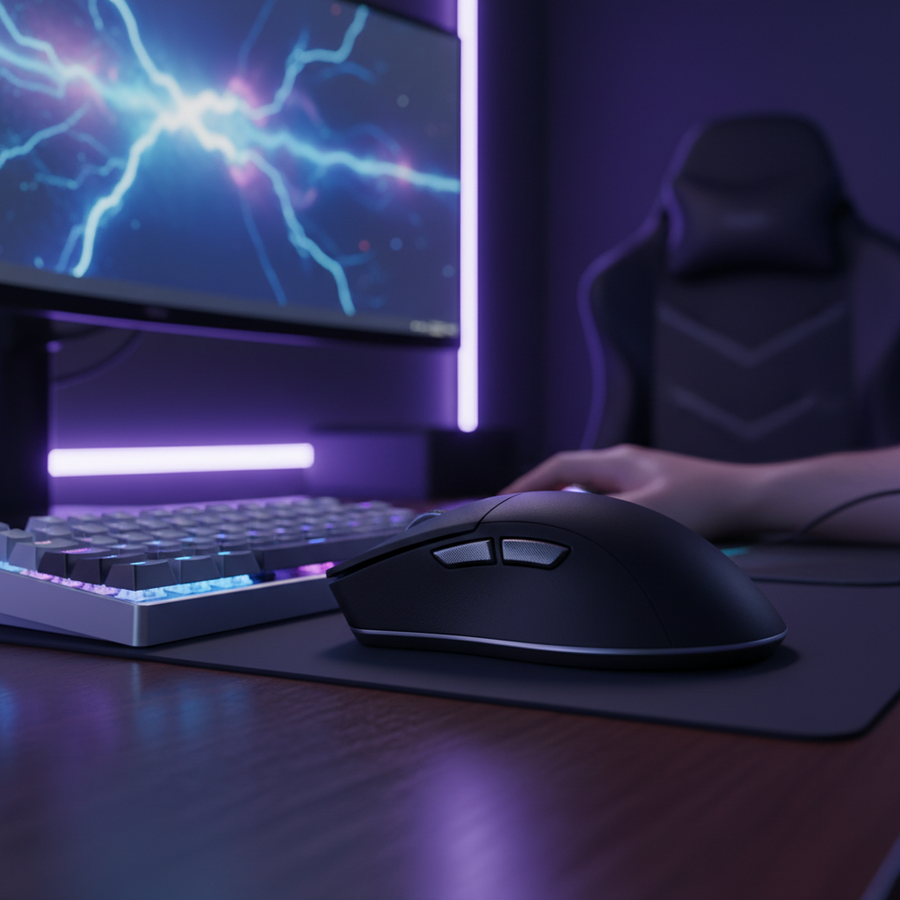
For the absolute "frame-perfect" execution of macros, the polling rate of your peripherals becomes a critical variable. While 1000Hz (1ms) is standard, high-spec challengers like the ATTACK SHARK X8PRO Ultra-Light Wireless Gaming Mouse & C06ULTRA Cable support up to 8000Hz (8K) polling.
At 8000Hz, the polling interval drops to a near-instant 0.125ms. This significantly reduces the "input-to-photon" delay, but it introduces new system constraints. According to the Global Gaming Peripherals Industry Whitepaper (2026), 8K polling stresses the CPU's Interrupt Request (IRQ) processing.
To maximize the utility of 8K polling for macros, we advise the following:
- Direct Connection: Always use a high-quality cable like the ATTACK SHARK C07 Custom Aviator Cable for 8KHz Magnetic Keyboard. USB hubs or front-panel headers introduce packet loss and shared bandwidth issues.
- DPI Saturation: To saturate an 8000Hz bandwidth, we calculate that a user must move at least 10 IPS at 800 DPI. If you play at 1600 DPI, you only need 5 IPS to maintain a saturated data stream, which improves cursor smoothness during the micro-adjustments often required while holding complex modifiers.
- Wired Priority: While wireless technology has advanced, frame-perfect macros benefit from the zero-interference environment of a wired connection. Wireless modes often add a variable buffer (Motion Sync) which, while improving consistency, can add ~0.5ms of deterministic delay at 1000Hz.
Ergonomic Strain: The Hidden Cost of Macros
The physical toll of maintaining multi-modifier combos is often overlooked. In a typical 6-hour MMO session, a player might execute thousands of modifier-heavy strings. We applied the Moore-Garg Strain Index (SI) to this specific workload to quantify the risk.
Our model yielded a Strain Index score of 48, which is categorized as Hazardous. This high score is driven by the extreme repetition and the suboptimal wrist postures required to reach Ctrl and Alt while maintaining a movement rotation on WASD.
To mitigate this, we recommend two primary strategies:
- Home Row Modifiers: Use firmware like QMK or ZMK to map modifiers to your home row keys (A, S, D, F) when held. This keeps your hands in a neutral position and eliminates the "pinky-stretch" to the bottom corner of the board.
-
One-Shot Modifiers: Configure your modifiers to remain active for only the next keypress. This allows you to tap
Shift, then tap1, rather than holding both simultaneously, significantly reducing sustained muscle tension.
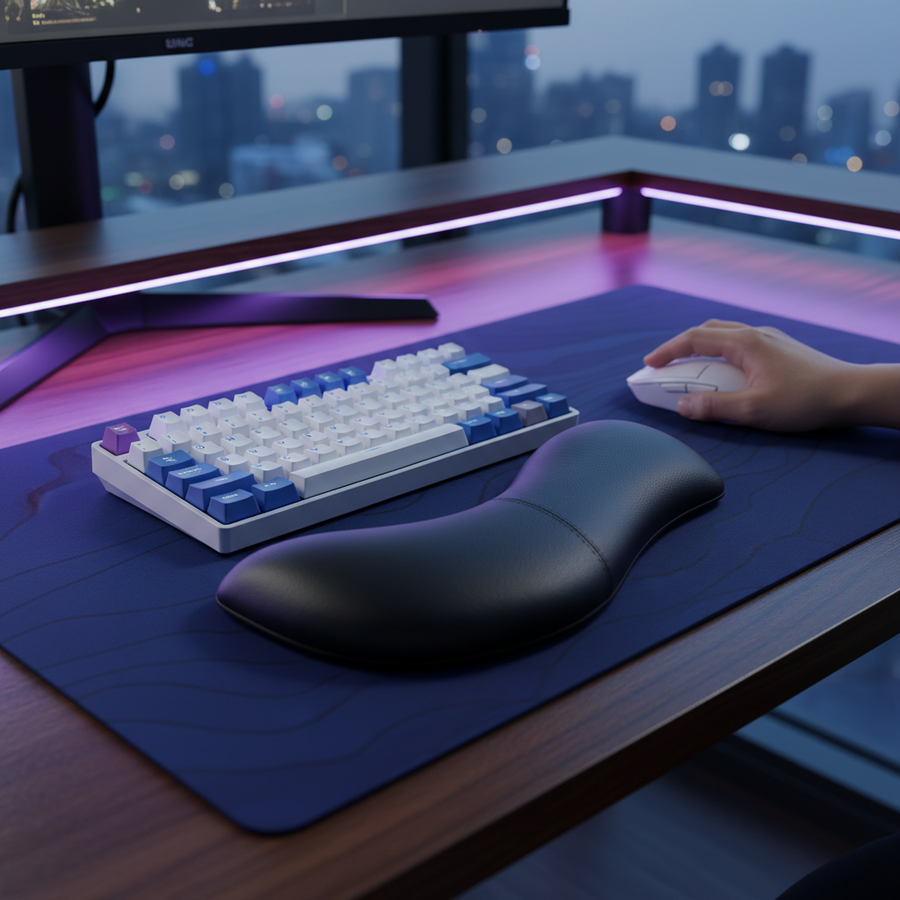
Additionally, the use of an ergonomic support like the ATTACK SHARK Cloud Keyboard Wrist Rest is essential. By elevating the palms to match the height of the keycaps, you reduce the extension of the carpal tunnel, which is a primary factor in preventing long-term repetitive strain injuries.
Modeling Note: Method & Assumptions
The data presented in this article is derived from scenario modeling designed for the "Competitive MMO Specialist" persona. This is a deterministic parameterized model, not a controlled laboratory study.
| Parameter | Value | Unit | Rationale |
|---|---|---|---|
| Polling Rate | 1000 - 8000 | Hz | Range of modern gaming peripherals |
| Finger Lift Velocity | 100 | mm/s | Average speed during rapid transitions |
| Scan Cycle Delay | 5 - 10 | ms | Recommended buffer for firmware parsing |
| SI Intensity Multiplier | 1.5 | - | Forceful modifier key presses |
| Session Duration | 6 | hours | Standard competitive gaming window |
Boundary Conditions: These models assume a Windows-based environment with high-performance power plans enabled. Results may vary on macOS or Linux due to different USB stack handling and IRQ scheduling. The Strain Index calculation assumes a standard QWERTY layout; split or ortholinear boards would yield lower SI scores due to improved posture.
Optimizing the Final String
Mastering firmware layering is a holistic endeavor that combines software logic with hardware precision. By implementing inter-key delays, leveraging the sub-millisecond resets of Hall Effect switches, and respecting the ergonomic limits of the human hand, you can transform a compact keyboard from a limitation into a high-performance tool.
For those pushing the boundaries of input speed, remember that the most expensive hardware is only as effective as the logic driving it. Whether you are using the ATTACK SHARK C06 Coiled Cable For Mouse for a clutter-free desk or fine-tuning your Rapid Trigger points, the goal remains the same: a seamless, low-latency connection between your intent and the game's response.
Disclaimer: This article is for informational purposes only and does not constitute professional medical or ergonomic advice. If you experience persistent pain or numbness in your hands or wrists, please consult a qualified healthcare professional.