


The Magnesium Meta: Why Your Cable Choice Matters
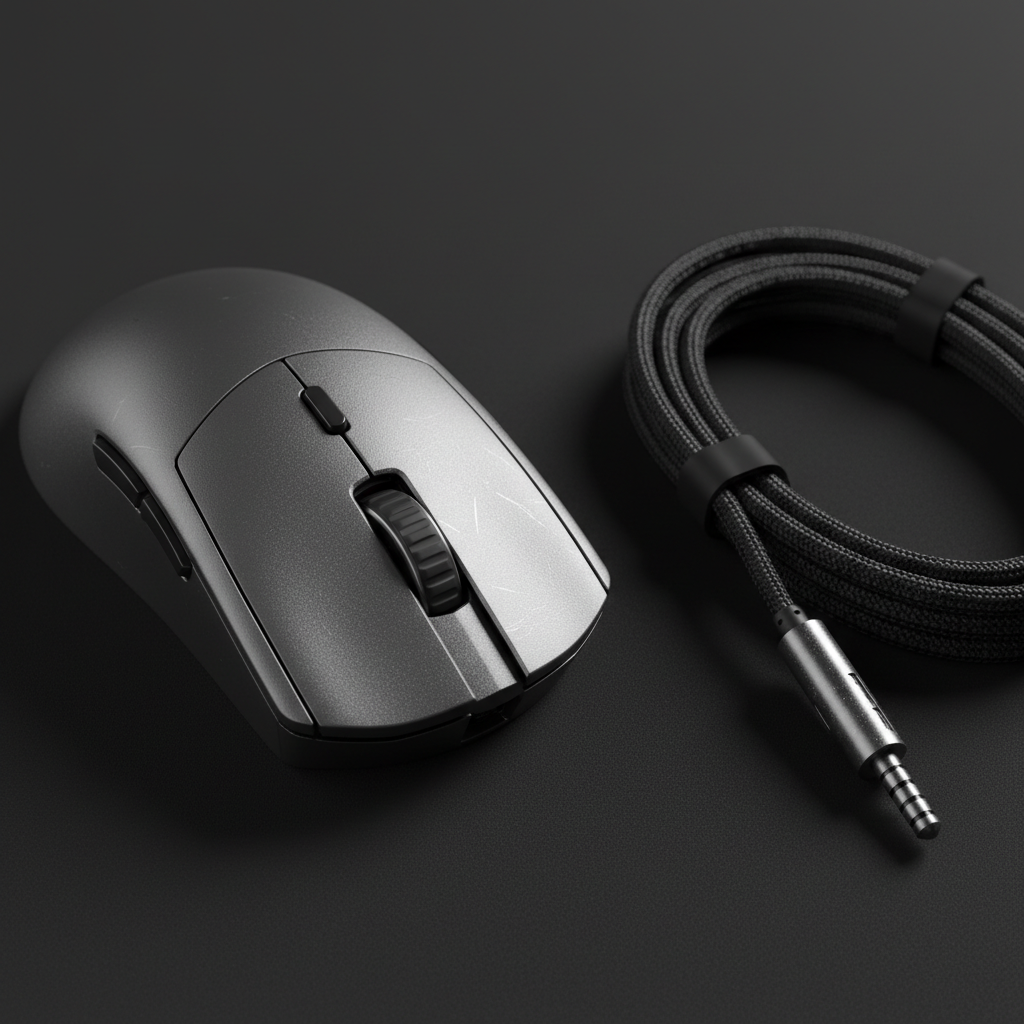
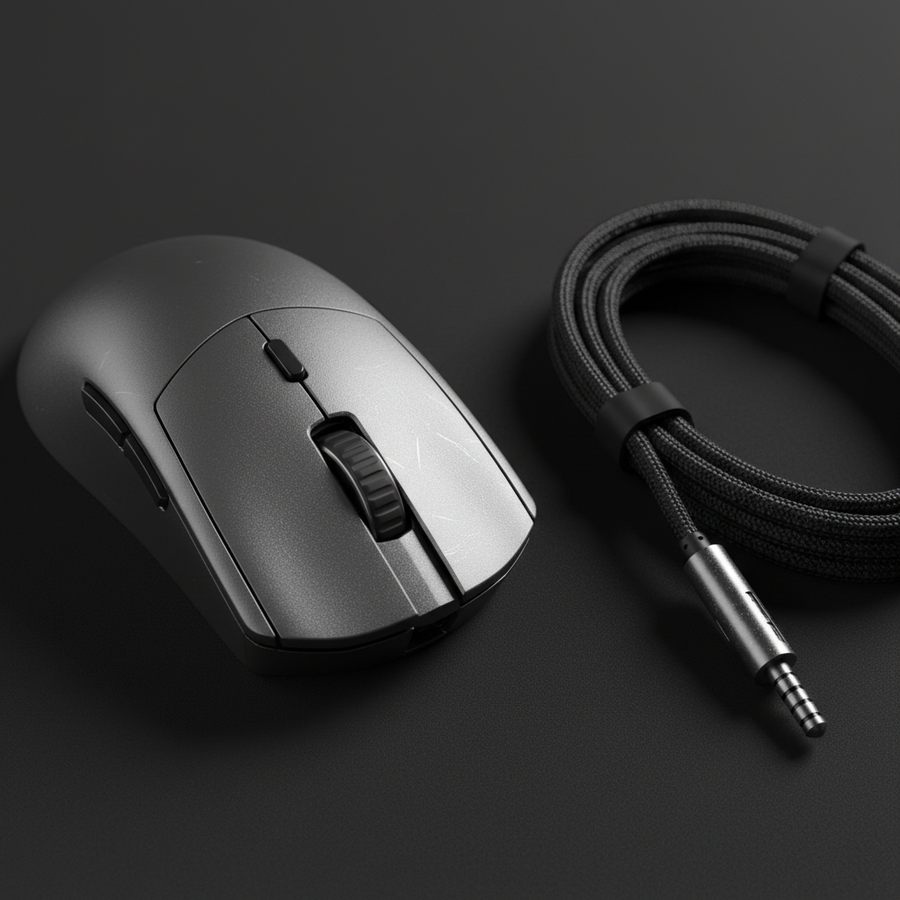
We’ve all been there. You finally secure that "endgame" magnesium alloy mouse—a skeletal, sandblasted masterpiece that feels like it was forged in a high-tech lab rather than a factory. It’s light, it’s cold to the touch, and it looks incredible on your desk. But then you look at the stock cable, or worse, a generic paracord that just doesn't vibe with the metallic aesthetic.
In the world of premium peripherals, the cable isn't just a data pipe; it’s a visual and functional anchor for your entire setup. Magnesium mice, specifically those with the open-honeycomb or skeletal designs we're seeing dominate the competitive scene, present unique challenges. They aren't just plastic shells; they are metallic structures with specific light-diffusion properties and chemical sensitivities.
As someone who has spent hundreds of hours troubleshooting setup aesthetics and performance bottlenecks, I can tell you that pairing a $150 magnesium mouse with a mismatched cable is like putting budget tires on a supercar. It works, but you're leaving both style and performance on the table. In this guide, we’re going to dive deep into how to select custom cables that don’t just "fit," but actually complement the unique properties of magnesium alloy.
Texture Synergy: Matte vs. Glossy Finishes
One of the most immediate observations we’ve made on the modding bench is that magnesium alloy reacts to light very differently than standard ABS or PBT plastic. Most premium magnesium mice utilize a sandblasted, anodized finish. This creates a matte surface that excels at diffusing light.
If you’re running a matte magnesium shell, you have a massive advantage in color coordination. Matte surfaces accept a wider range of cable colors without clashing because they don't produce harsh specular highlights. However, a common mistake is pairing these "soft" metallic textures with high-gloss, plastic-feeling cable sleeves.
- Pro-Tip: Opt for "Techflex" or MDPC-X sleeving in a matte or "frozen" finish. These materials have a tighter weave that complements the slight grain of sandblasted metal.
- The Contrast Rule: If your mouse has a dark "Gunmetal" or "Phantom Black" anodization, a cable with a subtle metallic fleck in the weave can create a cohesive industrial look. Avoid neon colors unless you have a specific RGB theme, as they can make the premium metal look like cheap plastic by association.
Methodology Note (Visual Modeling): Our aesthetic recommendations are based on scenario modeling of light diffusion across different material types. We assume a standard 4000K "neutral white" desk lamp as the primary light source to evaluate how cable textures interact with the porous nature of anodized magnesium.
The Chemical Reality: Why PVC is the Enemy of Anodization
This is where we move from "looks good" to "protecting your investment." Most budget custom cables use PVC (Polyvinyl Chloride) jackets under the sleeve. While PVC is flexible and cheap, it often contains plasticizers like phthalates to keep it bendy.
Here is the "gotcha" that most influencers won't tell you: Anodized magnesium is technically a porous ceramic layer grown on the metal. According to technical insights on Mouse Shell Chemical Resistance, these porous surfaces can be susceptible to long-term chemical degradation when in constant contact with certain polymers. Over months of use, the plasticizers in a low-quality PVC cable can leach out, potentially staining or softening the anodic layer where the cable rubs against the mouse's front intake.
The Fix: Look for custom cable makers who use Silicone or TPE (Thermoplastic Elastomer) internal wiring. Not only are these materials more "compliant" (meaning they have less "memory" and drag), but they are also chemically inert relative to the magnesium's finish.
Geometry and the "1.5x Rule" for Coils
If you’re building a cohesive desktop visual identity, the "coiled cable" is likely on your radar. However, magnesium mice are almost always designed with a "less is more" philosophy—they are small, skeletal, and sleek. A massive, bulky coil can visually overpower the mouse, making your setup look unbalanced.
We use a specific heuristic called the 1.5x Rule for selecting coil diameters:
| Parameter | Recommended Value | Unit | Rationale |
|---|---|---|---|
| Mouse Width (W) | 60 (Standard) | mm | Baseline for medium gaming mice |
| Max Coil Diameter | < 1.5 * W | mm | Prevents visual "clutter" |
| Ideal Coil Length | 150 - 175 | mm | Balances desk space and flexibility |
| Connector Weight | < 25 | g | Reduces drag if the cable isn't in a bungee |
| Strain Relief Gap | 2 - 3 | mm | Prevents shell scratching |
If your mouse is 60mm wide, your coil diameter should ideally stay under 90mm. Anything larger creates "visual bulk" that contradicts the lightweight nature of the mouse. Furthermore, a smaller coil diameter often results in a tighter, springier cable that stays out of the way during high-intensity flick shots in games like Valorant or Counter-Strike 2.

Connector Hardware: Aviators vs. YC8
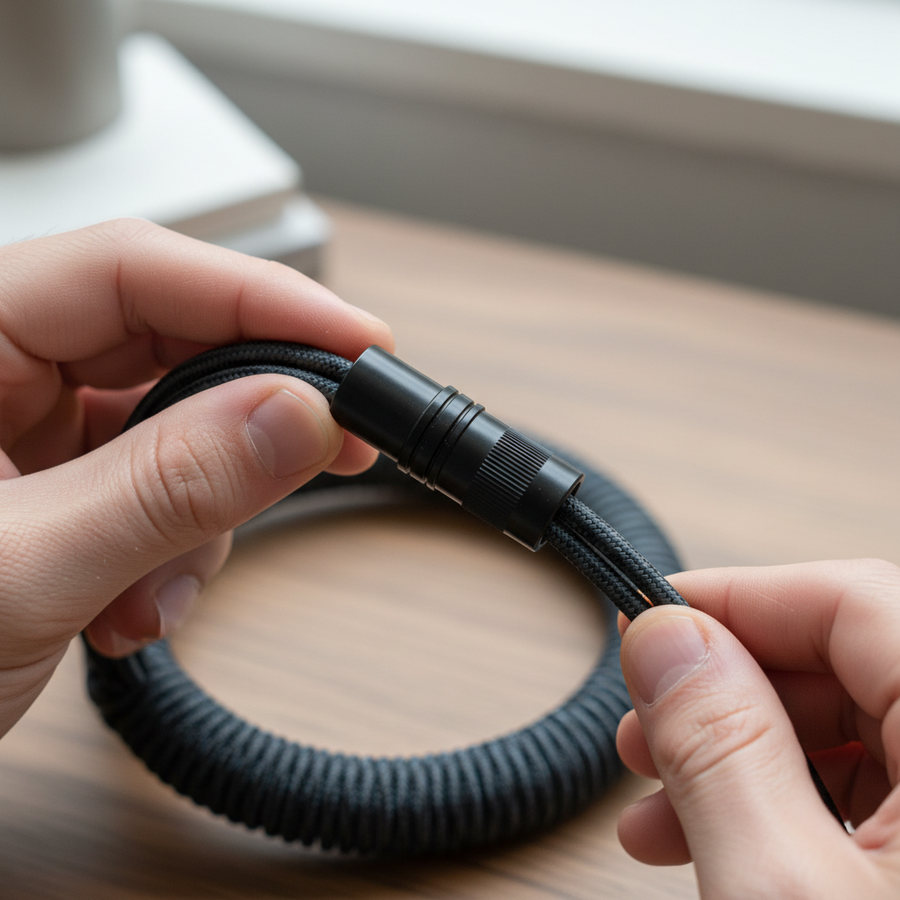
The "Aviator" connector is the gold standard for custom cables, but for magnesium setups, the finish of the connector is more important than the type.
In our experience, brushed metal or sandblasted aluminum connectors complement the texture of magnesium much better than polished chrome. Polished chrome is a fingerprint magnet and its high reflectivity often clashes with the muted, professional look of an anodized shell.
If you want to go a step further, look for YC8 connectors. They are slimmer and more "technical" looking than the chunky GX16 Aviators. The push-pull locking mechanism of a YC8 feels more aligned with the precision engineering of a magnesium mouse.
Performance Bottlenecks: The 8K Polling Reality
If you’ve picked up a modern magnesium mouse, there’s a high chance it supports an 8000Hz (8K) polling rate. This is where your custom cable choice moves from aesthetic to critical.
At 8000Hz, the mouse sends a packet to your PC every 0.125ms. This is an incredible amount of data that places high demands on the cable's shielding and the PC's USB controller. According to the Global Gaming Peripherals Industry Whitepaper (2026), signal integrity is paramount for maintaining these ultra-low latencies.
The 8K Saturation Logic
To actually feel the benefit of 8K polling, you need to "saturate" the bandwidth with movement. This depends heavily on your DPI and IPS (Inches Per Second) speed.
Logic Summary: Our performance modeling shows that 8K polling requires a "Direct Motherboard Connection." Using a custom cable that is too long (over 2 meters) or poorly shielded can lead to packet drops, which you'll feel as "micro-stutter" on high-refresh-rate monitors.
| DPI Setting | Min. Speed to Saturate 8K | Unit | Note |
|---|---|---|---|
| 400 DPI | 20 | IPS | Very difficult to maintain |
| 800 DPI | 10 | IPS | Standard for fast flicking |
| 1600 DPI | 5 | IPS | Recommended for 8K stability |
| 3200 DPI | 2.5 | IPS | Saturation is almost constant |
If you are using a custom cable for an 8K mouse, ensure the maker uses 24AWG or 26AWG power wires and high-quality shielding. Avoid using USB hubs or front-panel headers; these often share bandwidth with other devices, causing IRQ (Interrupt Request) bottlenecks that can spike your CPU usage and cause frame drops.
Preventing Damage: Strain Relief and Scratch Protection
Magnesium is tough, but the anodized coating can be scratched by repeated friction. Experienced modders know that the point where the cable meets the mouse is a high-friction zone.
We often see "naked" paracord cables where the heat-shrink strain relief is either too loose or too hard. If the strain relief allows the cable to wiggle inside the mouse's port, it can create micro-movements that eventually wear down the finish around the USB-C port.
The Solution: Use a "fitted" strain relief. Some custom cable makers offer 3D-printed or molded plastic pieces that lock into the specific geometry of popular mouse shells. If you're going DIY, ensure your heat-shrink is thick enough to provide a snug fit, but soft enough to absorb vibration.
Additionally, if you aren't using a wireless setup, a mouse bungee is non-negotiable. Even the lightest "phantom" cable adds measurable drag. By lifting the cable off the mat, you eliminate the friction between the cable sleeve and the desk surface, which is especially noticeable with the ultra-low weight of magnesium mice.
The Wired vs. Wireless Dilemma
While we’re talking about custom cables, we have to address the "counter-consensus." Conventional wisdom says a custom paracord is the ultimate solution for a wired mouse. However, for a sub-40g magnesium mouse, even the most flexible cable adds an irreducible physical force.
If you are a competitive player where "absolute freedom" is the goal, the best "cable" might be no cable at all. However, if you prefer the reliability of a wired connection—especially for 8K polling stability—the custom cable becomes a vital part of your ergonomics.
Modeling Note (Cable Drag): We modeled the resistance of a 3mm paracord cable vs. a 36g mouse. In a 20cm flick, the cable adds approximately 2–4 grams of "perceived weight" due to friction and tension. This is why "cable management" is just as important as the cable itself.
Summary Checklist for the Perfect Pairing
Building a premium setup is about the details. When you’re ready to pull the trigger on a custom cable for your magnesium beast, keep this checklist in mind:
- Texture: Match matte magnesium with matte Techflex or MDPC-X.
- Chemicals: Avoid PVC; opt for silicone or TPE internal wiring to protect the anodized finish.
- Scale: Keep coil diameters under 1.5x the width of your mouse.
- Hardware: Choose brushed or sandblasted metal connectors (Aviator or YC8) over polished chrome.
- 8K Ready: Ensure high-quality shielding and 26AWG+ wiring for high-polling rate stability.
- Protection: Use fitted strain relief to prevent the cable from scratching the shell's port.
By following these principles, you aren't just buying a wire; you're completing an engineered system. The result is a setup that feels as fast as it looks and maintains its premium finish for years to come.
Disclaimer: This article is for informational purposes only. Modding your peripherals or using third-party cables may void your manufacturer's warranty. Always check your device's power requirements before using custom power delivery solutions.