


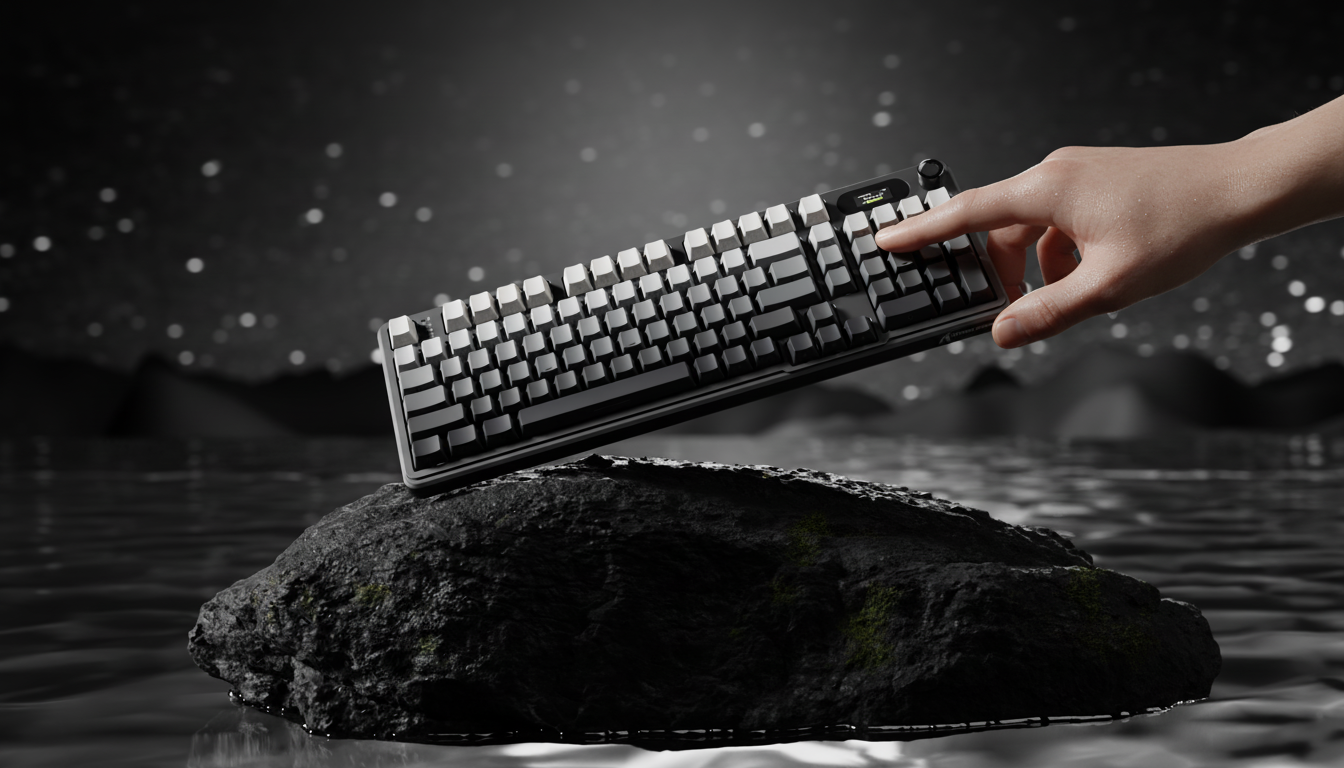
The Ergonomic Pivot: Understanding Alice and Arisu Layouts
The traditional rectangular keyboard layout is a legacy of the typewriter era, designed to prevent mechanical jams rather than accommodate human anatomy. For competitive gamers, this legacy often manifests as ulnar deviation—the outward bending of the wrists—which can lead to fatigue or repetitive strain injuries (RSI) during marathon sessions. The Alice layout, characterized by its split, angled clusters and "V" shape, aims to solve this by allowing the hands to rest at a more natural angle.
However, the transition from a standard staggered layout to an Alice or its arrow-key-equipped sibling, the Arisu, is not merely a cosmetic change. It represents a fundamental shift in muscle memory. While the ergonomic benefits are frequently touted in enthusiast circles, the competitive gaming community often views these curves with skepticism. The core question remains: does the ergonomic comfort of a curved plane compromise the precision and reaction speed required for high-stakes esports?
Biomechanical Mechanics: Fixed Curves vs. Individual Anatomy
The primary goal of an Alice layout is to preserve natural joint alignment. By splitting the alphanumeric keys into two angled halves, the board reduces the need for the user to "wing out" their elbows or twist their wrists inward. According to the Canadian Centre for Occupational Health and Safety (CCOHS), maintaining a neutral wrist position is the cornerstone of preventing musculoskeletal disorders.
However, a critical counter-consensus exists regarding "one-size-fits-all" ergonomic designs. Conventional wisdom suggests that any curve is better than a straight line, but our analysis indicates that a fixed curve can actually increase strain for certain users. Because the angle of the split is predetermined (typically between 10° and 15°), users with shoulder widths significantly narrower or wider than the design's "average" may find themselves forced into unnatural rotation.
Furthermore, the ergonomic effectiveness is often tethered to the use of a matching wrist rest. In many cases, the height and slope of an Alice board require a model-specific support to prevent wrist extension. Without this accessory, the "ergonomic" curve may inadvertently introduce new pressure points.
Logic Summary: Our assessment of ergonomic efficacy assumes that the user's shoulder width aligns with the keyboard's split angle. If the split is too wide for a petite user or too narrow for a broad-shouldered user, the fixed angle may fail to achieve a neutral joint alignment.
Competitive Gaming Friction Points: The Muscle Memory Gap
In fast-paced FPS or MOBA titles, the left-hand cluster is the cockpit. On a standard layout, the relationship between the WASD cluster and modifier keys like Left Ctrl and Left Shift is linear. On an Alice layout, these keys are often tucked inward or angled differently.
The Modifier Challenge
For gamers who use "Crouch" on Ctrl or "Sprint" on Shift, the inward curve of the Alice layout changes the reach distance for the pinky finger. Based on patterns observed in community feedback and enthusiast testing, this shift is the most significant hurdle for competitive play. Users report a "reach strain" where the pinky must stretch further or at a sharper angle while the rest of the hand maintains a claw or palm grip on the WASD keys.
The Split Spacebar Advantage
One of the most practical benefits of the Alice layout for gaming is the split spacebar. Typically, the spacebar is divided into two or three smaller keys. While this requires a 2-4 week adaptation period to build new muscle memory, it offers a distinct functional advantage:
- Remapping: The less-used half of the spacebar (often the right side for gamers who jump with their left thumb) can be remapped to a layer toggle, a dedicated macro, or a "Push-to-Talk" key.
- Acoustic Consistency: Shorter spacebars are easier to stabilize. Standard 6.25u or 7u spacebars often suffer from rattle or "tick." Smaller keys use standard stabilizers that, when tuned with dielectric grease, provide a much more consistent and responsive feel.
MOBA and RTS Mis-hits
In genres requiring rapid, sequential keypresses on the QWER or 1-6 rows, the curved matrix can disrupt the vertical key alignment that muscle memory expects. Unlike a traditional column-staggered layout, the Alice layout's curvature can lead to increased mis-hits during high-APM (Actions Per Minute) bursts until the user is fully acclimated.
Performance Synergy: Hall Effect and High Polling Rates
For gamers considering an Alice layout for its comfort, the choice of switch technology can offset the initial "learning tax" of the physical shape. Modern Hall Effect (HE) switches, which use magnetic sensors rather than physical contact points, are increasingly appearing in ergonomic form factors.
The Latency Delta
Hall Effect switches allow for "Rapid Trigger" functionality, where the key resets the instant the finger begins to lift, rather than needing to pass a fixed physical reset point. Under competitive conditions, this provides a measurable advantage.
Modeling Note (Latency Calculation): We modeled the reset-time delta comparing a standard mechanical switch (0.5mm hysteresis) to a Hall Effect switch (0.1mm dynamic reset).
- Mechanical Total Latency: ~14ms (includes travel time and debounce).
- Hall Effect Total Latency: ~6ms (eliminates debounce and minimizes reset distance).
- Result: A theoretical ~8ms advantage per keypress.
8000Hz (8K) Polling Logic
When pairing an ergonomic layout with high-performance internals, such as 8000Hz polling, the technical requirements become more stringent. A 1000Hz polling rate has a 1.0ms interval, whereas 8000Hz drops this to 0.125ms. To visually perceive the smoothness of an 8K polling rate, a high-refresh-rate monitor (240Hz+) is typically recommended to reduce micro-stutter.
However, users should be aware that 8K polling significantly increases CPU load due to IRQ (Interrupt Request) processing. For the best stability, these devices should be connected directly to the rear I/O ports of the motherboard. Avoid using USB hubs or front panel headers, as shared bandwidth can lead to packet loss and inconsistent performance.
Scenario Modeling: The Large-Handed Competitive Gamer
To demonstrate the practical trade-offs of the Alice layout, we simulated a scenario involving a competitive gamer with large hands (~20.5cm) and existing concerns regarding repetitive strain.
Run 1: Moore-Garg Strain Index (SI) Analysis
The Strain Index is a tool used to analyze the risk of distal upper extremity disorders. We applied this model to a high-intensity gaming workload (300 APM, 6 hours daily).
| Parameter | Value | Rationale |
|---|---|---|
| Intensity of Effort | 1.2 | Moderate exertion for rapid gaming keypresses |
| Duration of Exertion | 0.8 | Reduced ulnar deviation strain via Alice curve |
| Efforts per Minute | 4.0 | High APM scenario (~300 APM) |
| Posture Multiplier | 1.2 | Improved wrist alignment vs. straight layout |
| Speed of Work | 1.8 | High-speed competitive requirements |
| Duration per Day | 1.5 | Extended sessions (4-6 hours) |
Output: The Alice layout yielded an SI score of ~12.4. While this is classified as "Hazardous" (SI > 5) due to the extreme intensity of competitive gaming, it is a significant improvement over the baseline straight-keyboard model, which often scores higher due to poor posture multipliers.
Run 2: Mouse Fit and Peripheral Synergy
Ergonomics is a system, not a single device. For a user with 20.5cm hands using a claw grip, the ideal mouse length is approximately 131mm (based on the 60% hand-length heuristic). Using a standard 120mm mouse results in a fit ratio of ~0.91, meaning the mouse is roughly 9% shorter than ideal.
When paired with an Alice keyboard, this "short" mouse can exacerbate strain. Because the Alice layout angles the arms inward, a mouse that is too small may force the user to over-grip, negating the wrist-relief benefits provided by the keyboard. For optimal synergy, large-handed gamers should pair Alice layouts with ergonomic, full-sized mice to maintain consistent arm-wrist alignment.

Practical Implementation: Tuning and Modding
If you decide to adopt an Alice layout for its health benefits, several technical "tweaks" can improve the experience for gaming.
- Stabilizer Tuning: Because the split spacebars are small, they are prone to "rattle" if not properly seated. We recommend using dielectric grease on the wire ends and "holee modding" (adding a small strip of adhesive material inside the stabilizer stem) to ensure a solid, thuddy bottom-out.
- Foam Padding: The angled PCB of an Alice board can sometimes lead to an inconsistent typing feel on the outermost columns (keys like 'Q', 'A', 'Z', and the right-side modifiers). Targeted Poron foam padding beneath the PCB can help normalize the acoustics and feel across the entire curved plane.
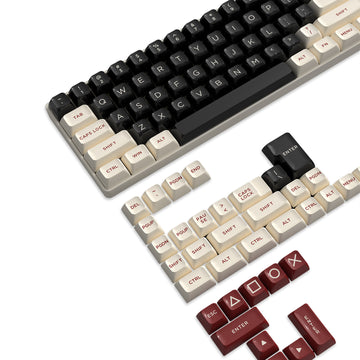
- Keycap Profiles: For gaming, we suggest a uniform or lower-profile keycap set, such as Cherry or OEM profile. Taller profiles like SA can feel unstable on the angled switches of an Alice board, increasing the likelihood of finger-slip during intense movement.
Trust, Safety, and Compliance
When purchasing specialized enthusiast hardware, especially from challenger brands, verifying technical compliance is a critical step for longevity and safety. Look for devices that have undergone rigorous testing:
- FCC/ISED Certification: Ensures the device meets radio frequency interference standards in North America. You can verify these via the FCC ID Search.
- Battery Safety: If choosing a wireless Alice board, ensure the lithium-ion battery is certified under UN 38.3 standards for safe transport and usage.
- Material Compliance: High-quality PBT keycaps and aluminum chassis should align with EU RoHS Directive standards to ensure they are free from restricted hazardous substances.

The Verdict: Competitive Edge or Ergonomic Compromise?
The Alice layout is not a "magic bullet" for gaming performance. It is a specialized tool that prioritizes long-term hand health and comfort. For the value-focused gamer, the trade-off is clear: you exchange a 2-4 week period of reduced performance and muscle memory retraining for a setup that significantly reduces the mechanical strain on your wrists.
If your playstyle relies on heavy use of the left Ctrl and Shift keys, be prepared for a steep learning curve. However, for gamers who can leverage the split spacebar for macros and who prioritize the ~8ms latency advantage of modern Hall Effect implementations, the Alice layout represents a viable, high-performance alternative to the traditional rectangle.
Disclaimer: This article is for informational purposes only and does not constitute professional medical advice. Ergonomic needs vary significantly by individual. If you are experiencing persistent wrist or hand pain, consult a qualified healthcare professional or ergonomic specialist.
Sources
- Global Gaming Peripherals Industry Whitepaper (2026)
- Canadian Centre for Occupational Health and Safety - CCOHS
- Moore, J. S., & Garg, A. (1995). The Strain Index: A proposed method to analyze jobs for risk of distal upper extremity disorders
- ISO 9241-410: Ergonomics of human-system interaction -- Part 410: Design criteria for physical input devices